Showing posts with label immigrants. Show all posts

Monday, November 6, 2017

A Handful of Favs

The semester is taking a turn as the second year students are heading out for practicum (teaching in the schools) and won’t be back until after Christmas. (Alright, they might be scheduled to come back once for a debriefing before Christmas.) This means, with only first year students here, the library is going to be pretty darn quiet. It’s not quite the ‘end-of-term’ feeling but its close.

It’s time to start getting caught up with reading.

Here are five fantastic picture books that coincidentally all touch on the same themes of fulfilling dreams or wishes, realizing potential, seeking knowledge, being curious and finding answers.

First up is The Antlered Ship by Dashka Slater. In a quest to find the answer to a slew of questions about how the world works, a red fox joins the motley crew of animals on a ship headed for an island with ”tall, sweet grass and short, sweet trees.” There are challenges and adventures along the way, testing the crew. But perseverance and friendship prevail, as well as the realization that there are always more questions to be pondered and seeking to understand the world is a never ending endeavor. This book is about friendship and that the journey is more important than the destination. Wonderful illustrations enhance this story. Recommended for grades 1-4.

The Book of Gold by Bob Staake is also about a lifetime quest for – you guessed it, The Book of Gold. A young boy finds everything boring and nothing interests him. Isaac’s parents do everything they can think of to show him the pleasures to be had in learning about the world around him. He’s just not into it, until he’s told the legend of “one very special book that’s just waiting to be discovered. It will look like any other book, but it holds all the answers to every question ever asked, and when it is opened, it turns to solid gold.”  The appeal of gold drives Isaac to open every book he comes across without much regard until one book catches his interest and a question pops into his head, “Why don’t the pyramids have windows?” Though his quest continues his entire life, he begins to discover the world first through books and then by traveling to faraway places. He never does find this elusive book but as an eighty year-old man, he’s able to intrigue another young boy with the promise of The Book of Gold. The illustrations are digitally rendered, highly stylized and distinctive for this author’s style. It’s a bit message-y for me but I think it would be a strong teaching book for grades 1-3.

The Almost Impossible Thing by Basak Agaoglu follows the evolution of a dream. It may start small but as an idea takes shape for a rabbit with high-flying aspirations, we get to see all the iterations of his/her attempts to become airborne. I see this one fitting into a design thinking or maker class that focuses on how an idea develops over time and the trial and errors that often go into getting an idea off the ground. The illustrations are light and airy with a minimalist feel.  I’m recommending this one for the younger primary grades.


My next recommendation is If You Hold a Seed by Elly MacKay because it can work both on a very real-world level as well as at the metaphorical level. Planting a seed (idea, hope, intention), nurturing it, waiting patiently for something to start to grow (develop, mature, swell) and then appreciating the tree (or whatever result you worked to achieve) that finally comes to be. The illustrations are soft and done with a warm palette which draws the reader in. I see this working well with grades kindergarten to grade 3 or perhaps higher if you’re teaching about metaphor.


The last recommendation is quite different from the first four in both subject matter and tone. A Different Pond by Bao Phi is a fictionalized, slice-of-life account of an immigrant family from Vietnam when a young boy accompanies his father on a fishing trip. This trip is done very early in the morning while it’s still dark out and between the father’s jobs. The fish they catch is critical for the family’s food supply. Both the author and illustrator have contributed notes that speak to their experiences as Vietnamese immigrants establishing themselves in a new country. Again, the strong illustration style contributes to the storytelling. Recommended for grades kindergarten to grade 3.

So, to all you second year students have a great practicum. Remember the Doucette Library is here to support your experience and if you need resources email us. Hope to hear from you soon.


Monday, February 8, 2016

Red Hand Day - February 12th

This Friday is the 14th year that the Red Hand campaign has sought to raise awareness for the plight of child soldiers worldwide.  It is estimated that there are over 250,000 children under the age of 18 who are forced to fight, kill, be sex slaves and otherwise support military initiatives around the globe. 


A very recent children's book, Child Solider: when boys and girls are used in war by Jessica Dee Humphreys & Michel Chikwanine was published as part of the CitizenKid series by Kids Can Press. 


It relates Michel Chikwanine's experiences as a five-year old abducted by rebel soldiers in the Democratic Republic of Congo in 1993. In a rite of initiation he was drugged and forced to kill his best friend. His time with rebels was unrelenting terror and brutality. He came to Canada when he was 16 and now as an adult promotes awareness of the suffering of child soldiers.

This book is well done for such a difficult topic. It's done in graphic-nonfiction style that handles the violence with care (not much blood and gore depicted). The illustrations are on the cartoon-y side which suggests a younger audience than the 10 to 14 year-old target he had in mind when writing this book. Information at the back of the book fills in information about children involved in military conflicts and how readers can help.

The book Out In Front: Grace Akallo and the pursuit of justice for child soldiers by Kem Knapp Sawyer has a different format but relates very similar circumstances. Grace is taken from her school in Uganda and forced into the Lord's Resistance Army when she was 15 years-old.  She, too, is subjected to the horrors of being a child soldier and 'wife' to a lieutenant in the army. She escaped after seven months. Now she also looks to promote understanding and rehabilitation for former child soldiers and to raise awareness for the children caught up in such dire circumstances.


This book is also filled with much information about the broader context of children used as soldiers interspersed with Graces' story. End notes include sources, a bibliography, index and websites to go to for additional information. This book is for grades 7 and up.

I'm recommending both books for their content. This is a cause that is important and worth children knowing more about.

UPDATE: CBC news article highlighted the VTECS : Veteran Trainers to Eradicate the Use of Child Soldiers as an initiative that will enlist veteran Canadian soldiers to aid in the prevention of recruitment of children as soldiers.

Monday, December 1, 2014

Art with a story


Migrant by Jose Manuel Mateo and Javier Martinez Pedro is an intriguing bilingual (English/Spanish) accordion-style folding book that looks to generate awareness about children who take huge risks in trying to enter the United States illegally, either alone or with their families.

In this story, short narratives from a child’s perspective accompany specific sections of the unfolding mural-like codex.  In the beginning life is good, with people in the village leading hard but fruitful, peaceful lives growing crops for a landowner.  But things change when some of the men leave to find work.  Eventually, the father of the boy telling the story also leaves the village, sending money back home occasionally.  But when the money stops coming and the mother finds it too difficult to survive in the village without work, she makes the decision to leave as well.

The main part of the story is the journey to reunite with the father. The family travels long distances and takes great risks jumping on trains, scaling walls, and evading police, capture and ‘disappearing’, all along way until they arrive outside Los Angeles.  Here they will find jobs cleaning houses and search for the father.

The art work is what predominates here.  Nine panels ‘unfold’ this story in black and white illustrations with exacting detail that fills up every panel.  For example, the village scene is packed with people, vegetation, animals, houses, mountains, a starry sky and a beaming sun.  We can see the watermelons, maize, and papayas being grown and harvested from the fields, while the bordering sea provides fish and fun.  It’s a bustling place.

In the artist’s note he tells us that he is following in the artistic tradition of the Mexican state of Guerrero and the work does have a folk art feel. However, I was also reminded of Peter Sis’s illustrations, as well, with tiny details conveying a multitude of life’s minutiae.  Our main character is discernible by the distinctive cap that he wears so the reader is able to keep track of him in each section (though I did have to hunt a couple of times).

The book is gorgeous, striking and provocative.  It conveys a child’s sense of home, fear, excitement, hopefulness and home-sickness.  The illustrations express the movement of people and the tension that such a situation naturally produces.  One review I read suggested looking at this book panel-by-panel and I would agree with this for the first reading.  But do open up the whole book, otherwise you’ll miss seeing the patterns of ‘lines’ that convey the sense of movement.  You have to spend time with this book.  It’s not a ‘quick read’.

Reviews are suggesting that young children are the target audience for Migrant but I would disagree.  The amount of detail, the black and white illustrations and the content of the story would be too much for the primary grades, in my opinion.  You could have young children track the protagonist throughout the story but then the point of the story would be misdirected.  If a child has been through a similar journey, then they would have some context for the story and this might work. The actual written story would be easily understood but I think the illustrations wouldn't hold young readers attention.

I’m recommending this book for older students, grades 9 and up, who would derive more from the whole book and would likely have the staying power required to work through and revisit the story. However, a co-worker thought that grades 5/6 could use it to model their own work on.


For extra interest, try pairing this with Tsunami  by Joydeb Chitrakar another accordion-style narrative about the 2004 tsunami that devastated vast areas of coastline in Southeast Asia.  I blogged about this one back in 2010.

Monday, April 7, 2014

The Play’s the thing

I was pretty keen on reading an adaption of Shaun Tan’s The Arrival as a play.

I mean, a wordless book turned into a theatrical production?  Whaaaa?

Well, while it might be said to be ‘based’ on the book it turns out not to be a direct, page-by-page adaption but is better described as a companion piece to the novel.

Which doesn’t mean it wouldn’t have a place in the classroom. 

If you're studying immigration and the migrant experience, then this little play would be very relevant.  It follows three main characters as they think about their lives living in a different country, separated from their families. There are several minor characters of various ethnicities filling out the cast.  They represent the commonalities experienced among immigrants.  One of the characters even says that “We are all in the same boat now!” speaking both physically and metaphorically.  Tan’s male character also undergoes some of the same experiences, leaving his family, sailing on a ship, arriving in a new country, coping with culture shock and meeting new people, often other immigrants.  These overarching occurrences certainly tie the book and the play together.

The play provides stage directions that indicate that at several points, Tan’s illustrations from the book will be projected onto a screen.

This book could be used as an example of adapting one kind of literary work into a different format.  In a conversation with Shaun Tan that is included at the front of the play, we learn that he is also working on the early phases of a feature-length project also based on The Arrival.  He says, “this would be yet another interpretation of story concepts that is likely to depart significantly from the original book, simply because the medium is so different – so quite a challenge.”

I can only imagine what the challenges might be but I'm also very keen to see what this project will look like.

Overall, reading the play is not as rich an experience as reading Tan’s The Arrival.  However, I think watching this play might be the best way to take it in. It incorporates acrobatic and circus-like elements to help impart the story. It looks fascinating.  Take a look and decide for yourself:


Monday, January 6, 2014

And we're off...

Happy New Year, Everyone!

I'm back and settling nicely into a different office space which is a partial explanation about why I was thin on postings before the holiday break.

But time off means reading a few books that have been on my list for a while.

The one book I read and adored is Open Mic: Riffs On Life Between Cultures in Ten Voices edited by Mitali Perkins.

Typically, I'm not drawn to collections of short stories or essays but I'm glad I snagged this one.

These 10 authors (some I know, others I was introduced to here) include David Yoo, Gene Luen Yang, Cherry Cheva, Debbie Rigaud, Mitali Perkins, Varian Johnson, Olugemisola Rhuday-Perkovich, G. Neri, Francisco X. Stork and Naomi Shihab Nye. Together they give us insights into the life of people living in socio-culturally complex situations.  Editor Mitali Perkins feels that using humour can ease the tensions that often occur when people talk about race issues.

 Humour has the power to break down barriers and draw us together across borders. Once you've shared a laugh with someone, it’s almost impossible to see them as ‘other’. (p.x)

A few of these entries are funny like David Yoo’s Becoming Henry Lee. It reminded me of Jordan Sonnenblick’s Zen and the Art of Faking It. In both of these stories we have Asian protagonists who take on stereotypical traits to become better accepted by non-Asian peers.  Both boys eventually learn that being themselves is the better way to go; it just might take a bit to out who they really are.

A few of the entries are really poignant.  I particularly loved Brotherly Love by Francisco X. Stork.  It’s about love and acceptance within family.  Or Voila by Debbie Riguad where cultural ‘clashes’ are more like ‘bumps’.

A few of the stories are just slices of life where cultural issues may just be another thing to deal with.  Take Mitali Perkins own story about learning about boys, dating and traditional Indian parents.

All the stories are a pleasure to read.


I would recommend Open Mic for grades 10 and up.

Monday, February 4, 2013

Nonfiction Monday is Here Today!


Welcome to Nonfiction Monday.  If you are interested in reading about children’s literature from around the blog-o-sphere, you've come to the right place.  Please link up to today’s event with the Mister Linky’s tab at the bottom of this post or leave a comment with all pertinent information and I’ll link you up.


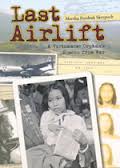
My contribution for today is Last Airlift: a Vietnamese Orphan’s Rescue From War by Marsha Forchuk Skrypuch.

This narrative recounts 8 year-old Tuyet’s evacuation from Saigon in 1975 as it was being invaded by Communist North Vietnamese.   The experience must have been terrifying for the little girl as she and several babies are whisked away from their orphanage, stuffed in an over crowded van that pushes through crowds of people looking for their own ways of escape, until it reaches a military airfield.  There, she and the babies (placed in boxes) are loaded onto a Hercules aircraft that would soon be filled with children.  There’s a photo that shows how the boxed babies were secured with long straps that looped around several boxes at a time.

The author conveys the desperate, rushed and tense atmosphere.  We too feel claustrophobic as the door of the airplane shuts and the heat and smell closes in around us and Tuyet.  Everyone seems kind to Tuyet but she has no understanding of why things are happening to her.  Was she selected to help with the babies like she did at the orphanage or because she has one weak ankle and foot, the result of polio?  Where is she going?  What will happen to her once she arrives?

Eventually, she arrives in Toronto. Again everyone is kind but no-one explains what is to happen next.  Her new friend, Linh thinks that they will be adopted by Canadian families but Tuyet is unsure if this will be her fate.  In Vietnam only healthy children were adopted, not children like her with a physical impediment.  But within a few days, a family does come for Tuyet who can’t believe her good fortune and initially thinks the family wants her to work for them, to help care for their other children.  This is not the case, of course and we learn how she settles into her new and often confusing, life.

Told in the third person, there is a remote element to the story that keeps us from emotionally connecting to Tuyet.  It is easy to imagine how frightening and incomprehensible the whole event must have been but the ‘voice’ of the book has a distant quality to it.  In the author’s note, Skrypuch mentions that Tuyet began to remember more of her experience as she told her story  which may have contributed to this feeling of being a little removed from the story.

However, the story is fascinating.  Being Canadian, I think of the Vietnam War as an American war.  Growing up during the 70s, even in small town Alberta, there were many ‘boat people’ settling into our schools and communities but I didn't really know specific stories.  Film, TV, and media usually depicted the American situation.  I've seen footage of Vietnamese people desperately trying to get onto to aircraft as they were leaving Saigon.  I hadn't realized that Canada had much involvement.

A sequel has been published, One Step At a Time, that continues Tuyet’s story as she undergoes treatment for her foot and ankle.  I too will continue with Tuyet’s story.

Recommended for grades 3 to 8.


Monday, March 19, 2012

Canadian calamities – Part 3

 With the 100th anniversary of the sinking of the Titanic fast approaching, this might be an opportune time to introduce students to Canada’s biggest maritime disaster, the sinking of the Empress of Ireland in 1914.  Into the Mist: the story of the Empress of Ireland by Anne Renaud (910.9163 ReI 2010) tells the story.


The beginning of the book may leave you wondering -- what does the Canadian Pacific Railway (CPR) have to do with an elegant ocean liner in the early 1900s?

As it happened, a young Canadian government commissioned the CPR to unite the country coast-to-coast to fulfill its promise to link the province of British Columbia with the rest of Canada.  Once accomplished, the ambitious company looked for ways to expand their business.  In addition to transporting European immigrants to farms in the West, they decided to develop a mail service across the Pacific and Atlantic Oceans, spanning just over 19,000 kilometers from Britain to the Orient (Japan and China) via Canada.

The Empress of Ireland was one ship in a series of ‘Empresses’ built to obtain this government contract.  These were big ships built for speed, with room for 1,550 passengers and luxurious fittings for those travelling first-class. The book includes lots of statistical data (size, weight, quantities of food, etc.) about the ship as well as stories of some of her passengers.  She ferried a number of celebrities such as Rudyard Kipling, John McCrae, Robert Baden-Powell plus actors, politicians and royalty.  There are a number of narratives about less famous people too, immigrants who were travelling to Canada to start new lives.

Unfortunately, this Empress was short-lived, crossing the Atlantic for only eight years (1906 to 1914) before sinking in the St. Lawrence River.  A collision with a coal freighter resulted in the huge ship sinking in just minutes, killing most of her passengers (840) and crew (172).

A recent newspaper article in the Calgary Herald (Sunday, March 4, 2012, p.A6) ran a half-page article about the Empress of Ireland and how few people know her story.  It was suggested that this maritime disaster is Canada’s equivalent to the sinking of the Titanic.  The relative obscurity of this story is the result of people’s preoccupation with the start of the First World War. I’m sure I’m not alone in never having heard this story prior to reading this book. 

One of the more intriguing stories is about a curse that followed Captain Kendall, captain of the Empress of Ireland at the time she sank. There’s nothing like the titillation of a curse to engage students.  Captain Henry Kendall, prior to taking charge of the Empress of Ireland, captained another ship that carried two infamous fugitives running away to Canada.  Disguised as father and son, the two were apprehended due to the eagle eyes of Captain Kendall.  Dr. Crippen cursed the Captain as he and his girlfriend were arrested for the murder of his wife.

The many newspaper clippings and black and white photographs show us the interior of the ship, first-class passengers enjoying the ship, and personal portraits of individuals and families, most often immigrants coming to Canada

Overall, it was an interesting read though I’m unsure whether students would gravitate to this book on their own.  The cover is dark and, in my opinion, not very enticing.  The organization of the book is occasionally problematic with details about passengers interspersed between sections of information. The side boxes which provide relevant information about the time period are occasionally disruptive to the flow of the book. However, if not a great cover-to-cover read, it will be excellent for research.

Monday, October 31, 2011

Historical thinking at its best

I seem to be on a kick of reading books about World War II and the Holocaust at the moment. I love reading about history but I don’t typically read a lot about the Holocaust specifically. Too disturbing and I’m a wuss.

The Year of goodbyes by Debbie Levy (811 LeY 2010) turned out to be an interesting read. It’s based on the author’s mother’s (Jutta) experiences as a child growing up in Hamburg, Germany as Hitler comes to power and begins persecuting Jews. It’s a combination of fiction and nonfiction as the author captures what her mother was thinking and feeling in 1938, the last year she and her family lived in Germany.

This book is written in narrative verse. Each chapter is centered on a page taken from her mother’s posiealbum (similar to an autograph book with poems) with the thoughtful inscriptions from her friends the basis for describing what life was like for Jutta before immigrating to the United States. There are the usual concerns of a twelve-year-old girl (family, friends, school). We are given glimpses into the confusing world that the Nazis had created where neighbours and friends disappeared, plus the many restrictions about going to school, where to shop or work, in addition to having many political rights taken away. The narrative captures the perplexity, fear and resentment that Jutta experiences. There is tenseness and terseness that is palpable as the family copes with everyday trials and as they attempt to leave Hamburg.

An extensive afterward outlines the events chronologically and what happened to Jutta and her family once they arrive in the United States. Additional research by the author tracked down what happened to many of Jutta’s friends, many of them not surviving the war.

I found this book very engaging and that I cared very much about young Jutta. The author may have used a fictional voice to tell her mother’s story but it rang true as if this was Jutta herself. I felt the ‘facts’ had been fairly represented. Compare this to a book I reviewed a couple of weeks ago (Brave deeds: how one family saved many from the Nazis by Ann Alma) where the author also uses a fictional voice to narrate at true story.

I recommend A Year of goodbyes for middle grades (5-8) and think it’s appropriate for students who might not be ready for more graphic Holocaust literature.

Today's Nonfiction Monday event is being hosted at the Jean Little Library site.  Stop by and see what other blogs are recommending for nonfiction children's literature.

Thursday, October 13, 2011

Situation: Bratty Sister

I’ve just finished reading Rukhsana Khan’s Big Red Lollipop (823 K527B PIC BK) and really enjoyed it. It’s a totally relatable story about an older sister (me) coping with the demands of a younger sister (my sister). Welcome to my childhood world.

Rubina receives an invitation to a birthday party from a girl at school. Her very first one! She’s so excited, rushing home to ask permission to go. Her mother doesn’t really understand what a birthday party is all about (the family is from Pakistan and it’s not a custom they follow) and sets the condition that she must take her younger sister. (The younger sister, Sana, kicks up quite the fuss about wanting to go, screaming “I wanna go now!”).


Rubina knows this isn’t going to go well and, sure enough, Sana proves to be a challenge at the party, having to win the party games and crying when she falls during musical chairs. Sana gobbles all her candy from her goodie bag and goes so far as eating Rubina’s red lollipop, too. (Rubina had saved hers and was eagerly anticipating eating it the next day.) Not good. Ami (the mom) brings home the lesson of ‘sharing’ which only aggravates Rubina more.

But a life lesson is just around the corner for Sana, too. She receives a birthday invitation from a school mate and then must deal with the youngest sister, Maryam demanding to go along, too. Ami’s condition stands – Sana gets to go only if she brings Maryam.

This where Rubina shines. She stands up for Sana and without a fuss convinces Ami to let Sana go alone. In appreciation, Sana gives Rubina the lollipop she gets at the party.

Sounds like the story might be a bit didactic but it isn’t. The illustrations are beautifully composed, with emotions conveyed with facial expressions and body language. The sense of frustration and lack of fairness is palpable from Rubina’s point of view. I love the illustration showing the ‘chase’ scene when Rubina seeks retribution after Sana eats her lollipop.

Visit Rukhsana Khan’s website for a teacher’s guide for this book and many of her others.

Thursday, August 18, 2011

Journal Entry #3 – Tripping along

I’m having a really hard time not getting caught up with journey = travel. Mostly because it fits so well with personal growth, opening one’s horizons, experiencing life in new places, meeting different people, adjusting to new circumstances and maybe taking a few risks. My own personal experiences are feeding into this and are always niggling away in the back of my mind, while I’m looking for resources related to the next ‘big idea’ to be explored at Nellie McClung Elementary School.


And, there are so many good books, both fiction and non-fiction, that could work with this aspect of journey.


Here are just a few examples of what I mean:


Nonfiction
Marco Polo by Demi (910.4 DeM 2008 PIC BK)
Our Journey from Tibet by Laurie Dolphin (951.5 DoO 1997)
Shipwrecked!: the true adventures of a Japanese boy by Rhoda Blumberg (952 BlS 2001)
Uncommon traveler: Mary Kingsley in Africa by Don Brown (910.9 BrU 2000 PIC BK)
The Wall: growing up behind the Iron Curtain by Peter Sis (823 Si81ZS PIC BK)
100 Great Journeys: exciting voyages through history and literature edited by Keith Lye (910.202 On 2008)

Fiction
Home of the brave by Katherine Applegate (823 Ap53H FIC)
Grandfather’s journey & Tea with milk by Allen Say (823 Sa99G PIC BK; 823 Sa99T3 PIC BK)
I Know here by Laurel Croza (823 C8862I PIC BK)
Kensuke’s Kingdom by Michael Morpurgo (823 M829K FIC)
My name is Sangael by Karen Lynn Williams and Khadra Mohammed (823 W6733M PIC BK)
One Crazy Summer by Rita Williams-Garcia
The Watson’s go to Birmingham – 1963 by Christopher Paul Curtis (823 C941W FIC)
Wizard of Earthsea by Ursula LeGuin (823 L527W FIC)
Ziba came on a boat by Liz Lofthouse (823 L8275Z PIC BK)

There’s a range of other things going on besides people traveling in these books. Some of these journeys are voyages of discovery and exploration (Mary Kingsley; Grandfather’s journey) whereas others are more happenstance (Shipwrecked!; Kensuke’s kingdom). Some of the journeys are undertaken because of desperate circumstances (Home of the brave; The Wall; Ziba came on a boat). Or sometimes it’s the desire to return home (Tea with milk) and be in the place you feel most at home (I know here) that drives the journey.


These travelers found themselves in situations (voluntary or involuntary) that took them out of their familiar surroundings, making them vulnerable and perhaps allowing them the opportunity to perceive themselves in different ways. Some of the questions the teachers at Nellie McClung School have come up with include those asking about whether a journey ever ends or what compels us to undertake a journey or what is a destination or what happens along the way and how linear does this path have to be. There’s a lot here to ponder and many of the above books will also give you lots to think about.

Thursday, June 16, 2011

World Refugee Day – June 20th, 2011


This year’s theme, selected by the United Nations High Commission for Refugees (UNHCR), is One Is Too Many.

Every day, millions of refugees face murder, rape and terror. We believe even 1 is too many.
Two resources that capture the refugee experience that I’d recommend are:


Inside out and back again by Thanhha Lai, a first novel based on her experiences living in Vietnam prior to the fall of Saigon, as a refugee and finally, in 1970s Alabama as an immigrant.


Culture shock and homesickness consume Kim Ha and her family as they adjust to their new lives. Though physically safe (well, mostly) the locals are not always welcoming and Kim struggles with finding her place in school, dealing with bullies and feeling ‘dumb’. The short, narrative verse format gives us ‘snapshots’ of Kim’s experiences but does convey the emotional upheaval as well as the physical. What was left behind in Vietnam and all the longing for things to be ‘normal’ are epitomized in Kim’s desire to taste fresh papaya. A very touching story for grades 4-9.

And


War child, (962.4 Wa 208 DVD) a multiple award winning DVD. Emmanuel Jal, a hip-hop artist who sings of his experiences as a Sudanese refugee and child soldier and is driven to make a difference in the lives of people in Sudan and Kenya. We see Emmanuel return to Sudan and reconnect with family members, in concert, and in a Kenyan refugee camp as a seven year old boy. (Rated PG-13).

Template Design | Elque 2007