Seasonal changes and the moon
Posted by Tammy Flanders at 6:00 AM 0 comments
Labels: animals, cross-curricular, First Nations peoples, indigenous peoples, picture books, science
Posted by Tammy Flanders at 6:00 AM 0 comments
Labels: art, diversity, First Nations peoples, identity, indigenous peoples, perspective, social issues
“I wrote it to remind us of our common humanity and the importance of holding each other up with respect and dignity… At its heart, it is a book about love, building relationships and fostering empathy.”
Posted by Tammy Flanders at 6:00 AM 0 comments
Labels: First Nations peoples, indigenous peoples, picture books, pleasure reading, social studies
Posted by Tammy Flanders at 6:00 AM 2 comments
Labels: First Nations peoples, fractured fairy tales, humour, indigenous peoples, internet resources, language arts, math, online resources, picture books, Pinterest, science, social justice, social studies
Not that teachers are going to want books that really go
into all the severity and ruthlessness that the past and the present encompasses.
But when I think of books like Stolen Words by Melanie
Florence, When I Was Eight by Kristy Jordan-Fenton and Margaret Pokiak-Fenton
or When We Were Alone by David A. Robertson, all relating aspects of life
in residential schools, these stories convey the deprivation without the
horrific details which is appropriate for young readers.Posted by Tammy Flanders at 6:00 AM 0 comments
Labels: Canada, community, historical thinking, indigenous peoples, picture books, social studies
Paula Hollohan is the Instructional Technologies & Information Specialist in the Doucette Library who keeps up with technology trends in education. Today's blog reviews a book that describes various modes of social media and how Indigenous peoples are connecting with it. Check in with Paula's blog, Doucette Ed Tech if you'd like to keep up with all sorts of cool and interesting, wide-ranging topics.
There are many benefits to working in an education library including reading
many great books and working with some leading edge technology. Once you
are immersed in the collection, sometimes you find special interests that merit
some study. For me, I am always on the look out for ways that the
indigenous people of Canada bolster the connection between young people and the
elders of these communities.
The importance of keeping the language and the stories of the past alive
with younger generations and the capturing of these narratives in their
original language is essential to begin the healing and to grow a strong
future.
There is a powerful digital world out there that can be harnessed to capture
these stories and connect indigenous communities together.
TheNew Smoke Signals: Communicating in a Digital World by Rachel Mishenene is
a small but powerful book that links the indigenous world to the digital world
in a easy, uncomplicated way. The book has a variety of information in
it. She says,
"First Nation, Inuit and Metis people across the country have embraced this relatively new way of communicating with each other, learning new things and preserving the old teachings." (p.5)
Posted by Tammy Flanders at 6:00 AM 0 comments
Labels: First Nations peoples, guest blogger, indigenous peoples, internet resources, online resources, social media, technology
Posted by Tammy Flanders at 6:00 AM 4 comments
Labels: community, First Nations peoples, historical thinking, indigenous peoples, picture books, Top 10 on the 10th event
Over the last few months, I started using Pinterest quite extensively as a way to curate titles of mostly juvenile literature to correspond with the Alberta Education curriculum.
Visit Doucette Library's profile on Pinterest.
Just this week I worked my way through the elementary program of studies for mathematics. This was not something I had been looking forward to (some of you may remember I'm somewhat of a math-a-phobe) and rate this right up there with going to the dentist.
Anyways, trying to use the learning objectives set out in broad categories by Alberta Education (numbers, patterns & relations, shape & space, statistics & probability) was a good starting point for organizing titles but quickly became too unwieldy. I created 13 boards to avoid lists with 100s of titles.
Take a look to see how I did that : Pinterest - Doucette Library (Tammy Flanders).
I included only books found in the Doucette Library and linked the boards to the library's catalogue. I've included a few titles for DVDs but focused primarily on fiction and nonfiction books appropriate for students in grades 1 to 6.
**You may notice the board, Variables & Equations (Patterns and Relations), has very few titles. If you know of any resources that would fit with algebraic thinking, I would be really, really grateful if you'd let me know. It may be that there aren't that many kids books with algebra written into the story line especially at the elementary level. Please drop me a line with your recommendations.
If you get to the Doucette Library's Pinterest page you will notice many other boards that also correspond to the Alberta Education curriculum for elementary science and social studies down to the level of every topic for every grade.
So, if you're teaching a science unit for one of the primary grades about colour this board might have titles that would interest you as a springboard, a provocation or a resource for scaffolding this topic.
Or, maybe you're teaching social studies and looking for resources about quality of life, or the history of Alberta or democracy; there are Pinterest boards for each of these topics.
There are a few boards that are not tied to the Alberta Education program of studies but still relevant. These include boards for First Nations, Metis and Inuit resources that are to be included across all content areas. You will also find boards for fiction that might make tie-ins with STEM or STEAM curriculum. Both of these groupings are organized by grade ranges of primary (grades K-3), middle school (grades 4-8) and secondary (grades 9-12).
One last board I'd like to highlight is specific to picture books for older readers. This is a topic of interest for those student-teachers (and sometimes teachers) teaching grades 6 to 12 that often don't think about using picture books. Many of the books listed here are some of my all-time favorites because they can be used across the grades to enrich many content areas. Interest? Click here to see what I've included.
These boards are proving useful for student-teachers when incorporating juvenile literature into their lesson plans. I invite you to check them out and let me know what you think.
Posted by Tammy Flanders at 6:00 AM 0 comments
Labels: indigenous peoples, internet resources, math, picture books, Pinterest, science, social studies, STEAM, STEM
I know that Hiawatha and the Peacemaker by Robbie Robertson will be a very useful resources for the grade 6 social studies topic, Historical Modes of Democracy taught in Alberta schools.
“The Peacemaker placed his fist over his heart, and again I spoke. ‘As Five Nations, we will bring forth peace, power, and righteousness. The women of our tribes shall appoint the Chiefs, and as one people we shall live under the protection of the Great Law. All voices will be heard as we now vote before action is taken.”Here is the general outcome as laid out in the Alberta Education program of studies:
Students will demonstrate an understanding and appreciation of the democratic principles exemplified by ancient Athens and the Iroquois Confederacy.Here are more specific outcomes focused on the Iroquois Confederacy:
6.2.4 analyze the structure and functions of the Iroquois Confederacy by exploring and reflecting upon the following questions and issues:
• How was the Iroquois Confederacy structured?• What was the role and status of women within the Iroquois Confederacy?• What are the advantages and disadvantages of consensus as a decision-making model for government?• How did the Six Nations use the consensus-building process?• How did the Wampum Belt address collective identity?• How did the social structure of the Iroquois Confederacy impact its political structure?• To what extent did the decision-making process within the Iroquois Confederacy reflect democratic ideals of equity and fairness?
Posted by Tammy Flanders at 6:00 AM 0 comments
Labels: authentic voice, biographies, diversity, historical thinking, indigenous peoples, picture books, social studies
Currently on display at the Calgary Public Library, is a
unique art installation known as The Witness Blanket.
“The Witness Blanket stands as a national monument to recognise the atrocities of the Indian Residential School era, honour the children, and symbolise ongoing reconciliation.”
Posted by Tammy Flanders at 6:00 AM 0 comments
Labels: art, authentic voice, biographies, First Nations peoples, historical thinking, indigenous peoples
Posted by Tammy Flanders at 6:00 AM 0 comments
Labels: biographies, historical thinking, indigenous peoples, picture books, social studies, travel
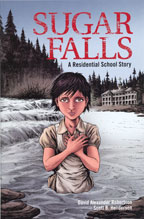
In pursuit of the big idea 'perspective', I've been reading many middle grade novels like a mad woman . Last night I gobbled up Sugar Falls: a residential school story by David Alexander Robertson (823 R545S8 FIC).
Posted by Tammy Flanders at 6:00 AM 0 comments
Labels: First Nations peoples, graphic novels, historical thinking, identity, indigenous peoples, Nellie McClung Elementary School, perspective, social issues, social studies
Posted by Tammy Flanders at 6:00 AM 0 comments
Labels: First Nations peoples, historical thinking, indigenous peoples, novels, social studies, war
The Chinese thought of it by Ting-xing Ye (609.51 YeC 2009) and African thought of it by Bathseda Opini (960 OpA 2011) are very informative following the same format of the first two books: maps, timelines, sections covering basic needs as well as aspects specific to cultural development such as music, arts, and sports. Good overviews with examples drawn from vast geographical areas with diverse cultures within them.Posted by Tammy Flanders at 6:00 AM 1 comments
Labels: First Nations peoples, geographical thinking, historical thinking, indigenous peoples, science, social studies, technology