Showing posts with label Canada. Show all posts

Sunday, November 11, 2018

100 Years Ago Today


Today is November 11th, 2018 one hundred years-to-the-day that World War I ended with the signing of the armistice.

The Vimy Oaks: a Journey to Peace by Linda Granfield tells the true story of a young Canadian soldier, Leslie Miller, who fought in France during World War I.  Based on his field journals, Granfield extracts snippets of text that describe his observations and experiences as he goes about doing his job as a member of the Signals Corps.  Many of the excerpts are descriptions of the landscape noting the beautiful woods and large trees or the terrible devastation wrecked on the countryside by the constant bombardment from both sides.  On April 9, 1917 the battle for Vimy Ridge began and while fighting in this area, Leslie Miller collected a number of acorns that had been blasted from oak trees, mailing them home to Canada.

After returning to Ontario, he started life again as a farmer. Miller planted the acorns he had sent home during the war. This becomes significant in 2004 when Monty McDonald, a family friend to the Millers, traveled to France and Belgium to see the battlefields of both wars. He noticed, while visiting the National Vimy Memorial, that the landscape, though green and forested again, was missing oak trees. He wondered if the trees that grew in Canada from the acorns collected by Leslie Miller could be used to re-establish the oaks at Vimy Ridge.
The Vimy Oaks Repatriation Project was launched with the intention of having oak trees once again growing at Vimy Ridge in time for the 100th anniversary of the end of World War I, November 11th, 2018. The book describes the process by which the Canadian oaks are being propagated and then taken to France or planted across Canada.
The book has been illustrated by Brian Deines but also contains numerous photos of people, places and things from that time period. I especially love the photo of Leslie Miller’s field journal that shows a couple of sketches he did of the trees he admired and his beautiful cursive penmanship. It provides lots of context that will help readers understand what was happening and some of the significance of those events. The connection between the past and the present is perfectly encapsulated here. 
Also included are a glossary and index.
I recommend this book for the middle grades when doing units about trees, Remembrance Day, Canadian history, World War I but also looking at topics of peace. The planting of these oak trees is such a wonderful symbol of healing, peace and remembrance.
“They will call upon us to remember the past – and a Canadian soldier who once held hope and rebirth in the palm of his hand.” (p.33)

Monday, October 22, 2018

Perfection


Town is by the Sea by Canadian author, Joanne Schwartz and illustrated by Sdyney Smith, is perfect.

It perfectly captures a time and place with its simple, evocative writing. The illustrations also perfectly convey a sense of tranquility in this small community at this time.

The story tells of, what feels to me, to be an average day in the life of a boy living in a 1950s small town in Maritime Canada located close to the sea. We learn that his father is a coal miner who works deep underground, under the sea. It becomes a refrain throughout the story that the boy remembers, time and again that his father works deep below the surface away from the light, the town and the sea.

There’s a rhythm of life that is palpable whether it’s depicted with everyday activities such as waking up, eating or playing on beat-up swings in the playground and going to bed; through nature's sun rising and setting; and work that will connect generations of family. The boy visits his grandfather’s seaside grave and at the end of the book remarks that he too will likely become a coal miner as the other men in this family and community have become.

The illustrations perfectly capture the calmness of this life (maybe there's an element of small town sameness that might be part of what I'm feeling) that I think reflects life for this time period. Subtle earth tones colour the illustrations giving them a sepia wash that contributes to that sense of a time in the past.  I especially love the picture which shows sunlight reflected off the sea water which is almost too bright to look at. This picture was perfectly realized.  The illustrations of life on the topside contrast with the illustrations depicting his father at work in the dark of the coal mine.  I can feel the density of the land and water that bear down on the miners and feel claustrophobic seeing the men bent over in the cramped dark space.

I highly recommend this book for elementary grades. It is especially relevant when studying curriculum about community, family, and Canada.


Monday, March 12, 2018

We are all treaty people - Classroom resources


Today’s post is focused on three new books in the Doucette Library. I know these books will be useful for classroom teaching in the primary grades. But I have some concerns about recommending them, too.

Let me explain…

The three books are The Handshake and the Pipe, TheFriendship, and We Are All Treaty People by Betty Lynxleg, illustrated by Scott B. Henderson and Amber Green and make up the trilogy, Treaty Tales.


From western Manitoba’s First Nation of Tootinaowaziibeeng Treaty Reserve, Betty Lynxleg presents information about symbols of respect between peoples, early contact with settlers in Canada, and the establishment and intentions behind treaties. They are well-written, explaining the importance of shaking hands and sharing a pipe as symbols of respect. It clearly explains how Indigenous peoples in Canada helped Europeans survive in North America by showing them what to eat, harvest, how to navigate and live with the land. The third book conveys the importance of treaties and the significance they have (or should have) for all Canadians.

 One of the real strengths of the series, is the way the story is laid out. It is a conversation between a grandmother and her granddaughter, emphasizing oral storytelling as a way of teaching between the generations. I think trying to convey the values of First Nations peoples and their connection to the land is valuable and important for all children to learn and these books do that.

I know these will be used in classrooms as they give easily understood explanations about the basic relationship between Indigenous and non-indigenous peoples in Canada.

And that may be where my concerns arise from.

Because the books are an introduction for grades 1 to 3, the complexities of the history and current events of today between First Nations, Metis and Inuit peoples and the Canadian government are glossed over.  These stories do not reflect the circumstances that drove Indigenous peoples to live on reserves or the realities of living there. The brutality, harsh living conditions and breaking of treaty promises is not addressed in any way.


Not that teachers are going to want books that really go into all the severity and ruthlessness that the past and the present encompasses. But when I think of books like Stolen Words by Melanie Florence, When I Was Eight by Kristy Jordan-Fenton and Margaret Pokiak-Fenton or When We Were Alone by David A. Robertson, all relating aspects of life in residential schools, these stories convey the deprivation without the horrific details which is appropriate for young readers.


All of these books require additional instruction for young students to begin to understand what Indigenous peoples have endured and continue to struggle with today. It will take a sensitive approach to tackle tough issues but these books will be helpful in initiating these kinds of conversations.

Another curriculum area that these books tie into nicely is social studies grades 1 and 2 about community.


Wednesday, August 10, 2016

Picture book Top 10 on the 10th - The World needs more Canada


It’s August 10th today and that means I’m participating in the Picture Book Top 10 for 10th Event once again. This is an annual event co-hosted by Cathy Mere of Reflect & Refine and Mandy Robek of Enjoy and Embrace Learning celebrating the top-picks, can’t-live-without picture books of blogging teachers, librarians, and other keeners who appreciate children’s literature. I’ve participated in a few of these events and always make a point of stopping by even when I don’t post a list of my own. I never come away disappointed, only with many, many recommendations of titles, new and old. Please stop by and take a gander at this diverse list. 

"The World Needs More Canada"

I decided to answer this call with my list today and focus on the Canadian authors and illustrators whose books continually appear in my workshops for student-teachers. These books often speak to something specifically ‘Canadian’ but for the most part I select them because they tell good stories or the illustrations are stunning, clever, beautiful or all three. In making my list there were a few who got cut only because we are limited to selecting ONLY TEN! Rest assured I've many more favourites that could have easily made the list.


So in no particular order, first up is Marie-Louise Gay


I've been a long time fan of this author-illustrator and am particularly partial to her series about Stella and her brother Sam. Stella is an older sister who is more than willing to answer and reassure Sam about the things he wonders and worries about. I love the whimsical illustrations and the affectionate relationship that comes across between these two characters. I would also recommend her book Any Questions? which addresses the many questions children often ask authors about writing books. 

Second is Tomson Highway.


I love the trilogy he wrote about a Cree family living in Northern Manitoba. The series includes Caribou Song (2001, 2013), Dragonfly Kites (2002, 2016) and Fox On the Ice (2003, 2010). Each book lets the reader look into a very different way of life that engenders a love of the land and family. The focus on a First Nations family 'shows' us how they lived without having to 'tell' us. These are bilingual books written in Cree and English.


Third is Ted Harrison.

Ted Harrison's art is very well known and easily identifiable.  He has illustrated two Robert W. Service poems about the far north, The Shooting of Dan McGrew and The Cremation of Sam McGee which are popular in schools. I often bring out Harrison's O Canada, an illustrated version of the national anthem. Each spread of pages captures evocative and iconic images of each province and territory; open spaces in the prairie provinces, the mountains in Alberta, the vast depths of ocean waters for the coastal provinces are just a few examples.


Fourth on my list is Melanie Watt.

Another author-illustrator, she is well known for a series of books featuring the most anxious, paranoid, safety-obsessed rodent you'd ever hoped to meet -- Scaredy Squirrel. I'm a wee bit more partial to Chester, a cat with authorial aspirations who will do anything to hijack Melanie's latest book. It's fun and cheeky besides having some classroom potential, as well.


My fifth author to note is Richard Van Camp.


I love this author for his storytelling ability, hands-down. Whether you are reading his books or listening to him as a presenter you will be easily caught up in the characters and places he's introducing us to. Two of his picture books for older readers that I often showcase for student-teachers are What's the Most Beautiful Thing About Horses? and A Man Called Raven. Van Camp is very much into incorporating traditional Native perspectives and values into his stories. He's is a Tłı̨chÇ« writer from Fort Smith, Northwest Territories.


Sixth up is Frank Viva.

I love his retro-style illustrations and the concepts behind Along a Long Road and A Long Way Away. Lots of playful language and interplay between words and images. Whereas Young Frank, Architect plays with the idea of differences in perspective. This one is a good one for units about building things in elementary science and STEM classrooms.
.


Number seven on my list is Roy Henry Vickers

This Northwest Coast artist illustrates traditional stories like Raven Brings the Light and Cloudwalker that relates how the three largest salmon-bearing rivers in British Columbia came to be. The artwork is simply stunning with vibrant colourwork incorporating Northwest Coast iconography.


The eighth Canadian author I'd recommend is Rukhsana Khan.


 I first read The Roses in My Carpets back in the late 90s. Her story of refugees living in a camp and yearning for a better life resonants even more strongly for me now than it did back then. Others of her books that I promote in workshops with students are books that feature everyday concerns for children such as learning tolerance and sharing with a younger sibling (Big Red Lollipop) and overcoming fears (The Ruler of the Courtyard).


Ninth on my list is Rob Gonsalves.

He's best known for his Imagine a... series of books that play with our visual perspective of common and uncommon scenes. My favorite is his first book, Imagine a Night. The cover gives you a sense of what this might look like. Until you look closely at the picture you see the reflection of coniferous trees backlit by the moon. But the reflected trees turn out to be a woman carrying a lantern coming from the water instead. The pictures can be surprising, amusing and eerie. Others in the series include Imagine a Day, Imagine a Place and most recently, Imagine a World.


And, the tenth Canadian author I urge you to check out is Paul Yee.


Many of his books appear in my workshops because his strong storytelling shows us life in Canada as a Chinese immigrant. Many of his stories are historical and are great to tie-in with the social studies curriculum in Grade 5. The Ghost Train and Roses Sing on New Snow are two that I use frequently.

So, how about it?  Have I given you a few new Canadian authors to check out? Or maybe I just reminded you of some books that you might just have to revisit. New or old these authors and illustrators are well worth becoming acquainted with.

PS. I know this 'looks' like more than 10 but count'em.  There's really only 10 authors. Just don't count the number of actual books, okay?  

Monday, November 9, 2015

Teddy’s adventures – The sequel

A Bear on the Homefront by Stephanie Innes and Harry Endrulat continues the story of the teddy bear we first met in A Bear in War. I blogged about it in 2010, recommending the book as a resource for Remembrance Day. 

In the first book, Teddy is returned to his human family in Canada after the soldier he accompanies to Europe dies at Passchendaele, Belgium.

Teddy resumes his story as British children arrive in Canada at the start of World War II - a safety precaution against bombing raids.  This time Teddy accompanies a young nurse, Aileen, as she meets the newly arrived children, traveling with them until they arrive at their destinations to settle with Canadian families.

Among the many children are Grace and William who Teddy picks out as looking particularly lost and afraid.  Aileen takes them under her wing offering Teddy to William to hold. Teddy is able to comfort the two homesick children on the train ride west to Winnipeg. Arriving late at night, Grace and William are very nervous about meeting the Dents, the people they will stay with. William wishes he can stay with Aileen and Teddy.

Aileen and Teddy decide that Teddy should go with William to help him adjust and settle in.  After Aileen leaves, William notices that Teddy looks sad and Teddy acknowledges that he wonders if he’ll ever see Aileen again.  William understands Teddy’s feelings as they reflect this own about leaving home and coming to Canada.

Living on the Dent’s farm turns out to be a different way of living for the children but the couple is kind and work to make the two feel welcomed. They soon settle into a new routine.  Nevertheless, William still misses home and wishes that the war would end soon.  So, does Teddy. After five long years, the war finally ends and the children return to England.

And Teddy? Well, he’s packed up and mailed to a Montreal hospital to be reunited with Aileen.  Teddy exclaims, “Finally, we were all back home, where we belonged.”

Bear On the Homefront will tie in nicely with units about Remembrance Day (November 11th) for elementary students. Besides connecting to Canadian history and war it speaks to the bigger ideas of home and family.

The authors include a page of information about Teddy, Aileen and her father, the soldier who died in 1917.

The following link will take you to the Canadian War Museum’s website and you can see a picture of Teddy which is where he now displayed.

Monday, May 11, 2015

Adventures with colour in Canada : Ted Harrison

 
Cover image: Magnificent Yukon
Besides being an immensely useful book in classrooms, A Brush Full of Colour: the world of Ted Harrison by Margriet Ruurs and Katherine Gibson, is filled with beautiful images and information about the life of Ted Harrison. Just what you’d hope for in a biography.

Set out chronologically, Ted’s childhood in a coal-mining town in England, his travels with the British army, and then as a teacher, are documented in his art, reflecting his growth as an artist as well as the myriad of artistic influences from various cultures. 

Eventually, settling in Canada (Alberta, Yukon and British Columbia), his distinctive style of bright colours, defining black lines, faceless people, juxtaposing contrasting and complimentary colours, and wide open landscapes, was developed and honed here
.
His work is easily identifiable and is often used in classrooms for students to model their own work on. The cheery colours and depictions of everyday life make this a style that can be emulated in elementary classrooms
.
Recommended for elementary grades but reading level would be best for the upper grades.

Monday, March 2, 2015

Curriculum connections


From There to Here by Laurel Croza and Matt James is a terrific picture book that would pair perfectly with the Alberta curriculum for the grade 2 social studies unit about communities.  It’s the sequel to I Know Here that also fits well with this curriculum topic.

In both books, our protagonist is an observant little girl who looks at the community where she lives.


In I Know Here, she revels in the community she’s a part of in rural Saskatchewan.  Her father has been building a dam and all the members of this community are involved in the same project. She loves the forest that’s behind her trailer: the wild animals that she hears and encounters, the dirt packed road lined with trailers of her neighbours, the school with a very understanding teacher and of course, the other kids she’s come to know.  It’s a great place to live and to have adventures.  When the dam project is completed the community will disperse to pursue employment elsewhere.  Our little girl is anxious about the move to the city of Toronto.

In the second book, From There to Here she’s learning about this place and making comparisons between her last home and this new one.  There are many differences: her father doesn't come home for lunch, everyone locks their doors, the roads are paved and there are few trees. When living in Saskatchewan all the children played and hung out together doing the same thing because there were so few of them.  In Toronto, the protagonist’s brother is off with his friends to some kind of exhibition which she’s too young to attend.  Though all these differences are noted and let us know how discombobulated the little girl is, it’s when there’s a knock on the door and new-friend-to-be-made, Anne, is there waiting, that we know that life will be okay.

I did think that the first book’s description of the little rural community very evocative and could feel the girl’s pain about leaving this place behind.  The description of Toronto is less suggestive of what it’s like as its being compared to what was left behind.  The illustrations give us a better look at this neighborhood in the big city.  The second book is about the differences between the two communities but also about resiliency and adjusting to new situations.  A new friend will be a big part of this little girl’s new life in Toronto.


A word about the illustrations – wonderful.  Very childlike drawings and fanciful use of colour help convey different feelings between the two locations. 

Monday, July 1, 2013

July 1st – Canada Day.

Happy Canada Day everyone.

Today’s recommendation is an updated, 10th Anniversary edition of Wow Canada! : Exploring This Land From Coast to Coast by Vivien Bowers.

Originally published in 1999 and updated in 2009, it still makes for a great classroom resource about Canada and its provinces for elementary grades.

A fictional family take a trip across Canada starting on the west coast travelling to the east coast and then through Canada’s Northern provinces and territories.  Along the way, they stop in many major cities taking in lots of tourist highlights, both natural and man-made.

Loaded with photographs, and with sidebars providing background information, the book also has postcards and letters to friends, which give us more personal insights about their many experiences.  Provincial symbols are included in a section at the back of the book as well as an index.

Because it’s not possible to hit every city and every tourist attraction in this country unless you've set aside months for travel time, each section includes all the things the family would like to see on their next visit through that province.  This has great potential for research about these places.

Incredibly informative without seeming to hit us over the head that this is an information book about Canada, it’s easy to pop in and out of each province (section), glean a bit and enjoy the vastness of the country and its’ rich diversity. 


Armchair travelling without the fuss, muss and bother.  Though I’d do enjoy the fuss, muss and bother myself.  How about you?

Wednesday, August 15, 2012

Summertime reading update: Lots of time off = Lots of reading


Here are some of the reading highlights I enjoyed over the last few weeks while I was on holiday.  You’ll notice that a good many of the titles listed are appropriate for middle grades.  I purposely choose many books with this age in mind as I'm preparing to present a book talk at the end of the August to elementary school teachers focused on the big idea of ‘perspective’.  (See posting from July 5th for more information.) Many of these books will be included in the book talk.

Fiction

Amulet: The Last Council, book 4 by Kazu Kibuishi (823 K533A4 FIC)
The action continues in the 4th instalment in this graphic novel series.  A young girl continues to outwit her enemies with her quick thinking, powerful amulet, and the help of her companions.  High quality production.  Suggested for grades 5-9.

The Chronicles of Harris Burdick: 14 amazing authors tell the tales by Chris Van Allsburg (823.008 Chr 2011)
I’ve always loved the picture book They Mysteries of Harris Burdick and was more than happy to spend time with this collection of short stories written by various authors that interpret the fine illustrations from the picture book.  Suggested for grades 5-9.


The Conductor by Laetitia Devernay (823 D493C PIC BK)
A beautiful, wordless picture book that reads like a poem.  A conductor arrives in a grove of trees and begins to entice the trees to bend and swirl until the leaves take flight in bird form. Suggested for all ages.


My Name is Mina by David Almond (823 Al68M9 FIC)
This companion book to Skellig tells the story of Mina as she writes in her journal.  She’s creative, forthright, bold but sometimes insecure and looking to make a new friend.  Beautifully written.  Suggested for grades 5-9.


Plain Kate by Erin Bow (823 B671P FIC)
A fantasy with an orphan who’s on the run with a talking cat who eventually learns to trust people.  Good adventure and tension build up that kept me interested.  Suggested for grades 5-9.

The Red Blazer Girls by Michael D. Bell (823 B398R FIC)
To solve this mystery, clues involve math, literature, logic and cornering less-than-honest people.  Great group of girls who are smart, adventuresome, and loyal.  Suggested for grades 5-9.


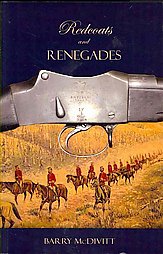
Redcoats and Renegades by Barry McDivitt (823 M144R FIC)
An historical novel that takes us back to when the Northwest Mounted Police (the early incarnation of the RCMP (Royal Canadian Mounted Police) or Mounties) trekked through the United States to get to the Canadian West.  The trip was fraught with many problems mostly due to inexperience and poor planning.  The book reads like an adventure story as it is told through the eyes of a teenage boy.  This was a good read that manage to blend a good story with lots of history without making it heavy going.  Suggested for grades 6 and up.

Stolen Child by Marsha Forchuk Skrypuch (823 Sk68S6 FIC)
A solid story that highlighted an aspect of WW II I knew nothing about.  Nazi’s would kidnap children who fit their ideal of looking Aryan from non-Germans, including Jews.  Nadia has recently immigrated to Canada but is troubled with memories of people who may or may not be her parents. Suggested for grades 4-7.


Toads and Diamonds by Heather Tomlinson (823 T596T FIC)
Based on the fairy tale by Charles Perrault, this retelling is placed in pre-colonial India.  Two sisters, both blessed and cursed by a goddess (one has gems and flowers fall from her lips when she speaks and the other, snakes and toads) struggle to understand the meaning behind the goddess’s actions as well as stay alive.  Suggested for grades 7 and up.


Nonfiction

Chuck Close: face book by Chuck Close (759.13 ClC 2012)
Very cool book.  A look at this very interesting artist and how he goes about creating his work.  Loved it!  Suggested for grades 4 and up.

The Good, the Bad, and the Barbie by Tanya Lee Stone (688.7221 StG 2010)
This has been on my to-read-pile for quite sometime.  I’m glad I didn’t pass it over.  Very interesting account of the history of the doll but with lots of anecdotes relating the impact, both positive and negative, of Barbie on the girls (now adults) who played with the dolls.  Suggested for grades 7 and up.

His Name Was Raoul Wallenberg by Louise Borden (940.5318 BoH 2012)
 A fascinating account of this Swedish war hero who save thousands of Jews in Hungry during World War II. Suggested for grades 7 and up.

Lone Hawk: the story of air ace Billy Bishop by John Lang (940.44941 LaL 2011)
A graphic novel, biography of Canadian war hero, Billy Bishop.  It briefly covers with his childhood and his incredible marksmanship.  When World War I starts, he signs up and quickly moves from the mud filled trenches to the wide open, but dangerous skies.  He is accredited with 72 official victories (taking down German planes).  This reads as high adventure but makes us realize the danger and trauma associated with war.  Suggested for grades 5 and up.

Superman Versus the Ku Klux Klan by Rick Bowers (973.91 BoS 2012)
I found this to be totally engrossing.  Learn about the history of Superman, history of KKK and how in the 1940s the radio show featuring Superman, raised awareness about this terrorist group while promoting tolerance.  Suggested for grades 7 and up.

Witches!: the absolutely true tale of disaster in Salem by Rosalyn Schanzer (973.2 ScW 2011)
Highly readable account of the witch hunts and trials in Salem, Massachusetts in the early 1600s.  I particularly loved the illustration style of woodcuts that added to the whole feel of olden times.  Suggested for grades 6 and up.

Template Design | Elque 2007