Showing posts with label First Nations peoples. Show all posts

Monday, August 20, 2018

Seasonal changes and the moon


We’re on the cusp of starting a new school year which for me feels more like the ‘new year’ than the one we start on January 1st.  A new school year also connects very strongly with seasonal change; Fall is not far off.  We can often see the early signs that cooling temperatures and less light bring to the natural world.  Trees and other plants change colour, drop leaves and flowers and slowly begin to die back.  Animals and birds start to migrate, change colour or grow thicker coats.  It’s all about seasonal change.


Taan’s Moons: a Haida Moon Story by Alison Gear and illustrated by Kiki van der Heiden with the Children of Haida Gwaii, beautifully illustrates seasonal change in a specific area, the northwest coast of British Columbia.

This book looks to present traditional Haida Gwaii knowledge that has been passed down through oral tradition and varies between villages, clans, families and language groups about the Haida moon cycle.

Each double page spread features one of twelve different moons spanning a year. Bear Moon, Snow Moon and Bears Hibernate Moon occur during the winter months, for example. Each title is in English, Skidegate Haida and Old Massett Haida. Every moon has a four line poem that speaks to the essence of that time period as it relates to the life of a bear.

Bears Hibernate Moon is described as,

Taan lumbers up the mountain;
hemlock curtains close.
She crawls into a dent or roots,
and then begins to doze.

The illustrations have been co-created by Kiki van der Heiden and primary grade children from various schools in the Haida Gwaii area, using felt.  The illustrator states, “the images that bring this story to life have come from the children’s imaginations, and have been enthusiastically and lovingly created by them, with final touches respectfully applied by Kiki.

Great care has been given to recognizing everyone involved in this project, appreciation for the traditional stories and the Indigenous people who tell them. The book includes a forward (by Richard Van Camp), a preface, back notes honouring contributors, artists and other participants of which there were many, a note about Haida language, a note about the illustrations and credit for where “a written record of this particular cycle can be found.”

This is a lovely book that works across content areas embedding Indigenous knowledge and connecting to nature.  What better way could there be to learn about culture, science, nature, art, story, poetry and language?

I recommend this one for elementary grades.

Monday, May 21, 2018

#NotYourPrincess


Editors Lisa Charleyboy and Mary Beth Leatherdale have compiled writings and visual art from over 50 contemporary Indigenous women artists from across North America in their latest book, #NotYourPrincess.

These artists highlight aspects and issues of life as Indigenous women such as identity, assimilation, racism, abuse, murdered and missing Indigenous women, resiliency, connection to the land, hope and change for the future.

Each entry is one or two pages long and vary in format from short essays, poems, interviews, letters, brief quotes, to photographs and drawings.

The writing and images are strong and convey the strength, love and recognition about who they are and where they come from. These are contemporary women connecting past, present and future.

This book is another important resource to make available in high school classrooms for all students.

Charleyboy’s and Leatherdale’s first two compilations are Urban Tribes: Native American in the City and Dreaming in Indian: Contemporary Native American Voices which I also highly recommend.


Monday, April 16, 2018

A real beauty


The Doucette Library is coming into summer-mode – students’ final day was last Friday, exams are scheduled for the next couple of weeks and then--- ahhhhh….sigh… Catch-up time!

Catch-up for me includes reading way more picture books and today’s recommendation is a beauty.


You Hold Me Up by Monique Gray Smith, illustrated by Danielle Daniel is topping my highly recommended list for 2018.

It is a beautiful book gently told and simply illustrated about treating each other with kindness and respect. Everyday activities such as playing, listening, singing, comforting are all ways in which we can hold each other up – the overarching message of this book.  
Monique Gray Smith, a Canadian author of mixed-heritage Cree, Lakota and Scottish descent, has written the book in the spirit of reconciliation. In the author’s own words, she tells us,
“I wrote it to remind us of our common humanity and the importance of holding each other up with respect and dignity… At its heart, it is a book about love, building relationships and fostering empathy.”

I especially appreciate the illustrations depicting Indigenous children and adults in these common, everyday events. The illustrations are perfectly matched to this book with bright, bold colours, uncluttered spaces and stylized figures. It’s in keeping with the sparsely-worded yet affecting text.

This book should find a home in every primary grade classroom for discussions about how to treat one another, family and community.

Monday, March 19, 2018

PBA: Pinterest board ALERT!


Just a quick reminder to everyone out there about the Doucette Library’s Pinterest page.
This page includes numerous boards that support the Alberta Education curriculum but can support any kind of teaching depending on the topic.


Here’s the link for all the boards: https://www.pinterest.ca/tflander/boards/

If you’re teaching about plant and growth and in Alberta then you’re teaching grade 4 science and you can consult this board (https://www.pinterest.ca/tflander/science-gr-4e-plant-growth-and-changes/) to see what resources the Doucette Library has to support it.  If you’re not in Alberta, I think there is enough here that would useful for others to consult, as well.

What I’ve worked on so far:

**Social studies grades 1-9;
**Science grades 1-8 (9 is coming soon);
**Math grades 1-6 organized according to board mathematical concept;

 and many topical boards based on requests from the education program’s students such as LGBTQ resources, picture books for older readers, resources for STEM, activists and activism, funny books, fractured fairy tales,  and indigenous education.

I’m sending out the reminder because I’ve just added to new boards for English language arts (ELA).  These two boards compile titles of books with strong leads or good beginnings and literary devices.  These came about because students had asked for recommendations for both of these kinds of books and as a reference librarian it’s a time consuming request. This time I decided to record the work as Pinterest boards. I’ve also asked Paula Hollohan, coworker and guest blogger, to contribute to the boards to have a couple of different points of view.


Take a look and let me know if you have some suggestions of books to add. I’m always open to suggestions.

Monday, March 5, 2018

Guest blogger: The New Smoke Signals


Paula Hollohan is the Instructional Technologies & Information Specialist in the Doucette Library who keeps up with technology trends in education. Today's blog reviews a  book that describes various modes of social media and how Indigenous peoples are connecting with it. Check in with Paula's blog, Doucette Ed Tech if you'd like to keep up with all sorts of cool and interesting, wide-ranging topics.


There are many benefits to working in an education library including reading many great books and working with some leading edge technology.  Once you are immersed in the collection, sometimes you find special interests that merit some study.  For me, I am always on the look out for ways that the indigenous people of Canada bolster the connection between young people and the elders of these communities.  

The importance of keeping the language and the stories of the past alive with younger generations and the capturing of these narratives in their original language is essential to begin the healing and to grow a strong future.

There is a powerful digital world out there that can be harnessed to capture these stories and connect indigenous communities together.

TheNew Smoke Signals: Communicating in a Digital World by Rachel Mishenene  is a small but powerful book that links the indigenous world to the digital world in a easy, uncomplicated way.  The book has a variety of information in it.  She says, 

"First Nation, Inuit and Metis people across the country have embraced this relatively new way of communicating with each other, learning new things and preserving the old teachings." (p.5) 

And so begins a look at modern technology like cellphones, social media like LinkedIn and blogs, to help tell the stories that are important to indigenous communities.  I especially liked the example of the blog, where a free-lance writer named Stan reflects on the life of his aunt in a blog post after she passes away.  Contained within this section are the reasons someone would blog and the fact that most blogs are read in the morning along with a complete reprint of Stan's tribute story about his aunt.

This book is from a small publisher called Ningwakwe Learning Press (www.ningwakwe.ca) but does a fine job of bridging the gap between young and old indigenous people.


Monday, October 16, 2017

Importance of Identity

I’ve been pretty wrapped up the last several weeks doing lots of instructional workshops around interdisciplinary teaching. The student teachers are grouped with students from various disciplinary backgrounds. One of the ways I help with this particular course is to speak to conceptual thinking and connect it to resources found in Doucette Library’s collection.

The Arrival by Shaun Tan is a crucial part of this workshop as I use it as an example of a provocation, a resource that can be used as a hook for engaging student interest. I come back to it, throughout the workshop, as this book epitomizes conceptual thinking. There are so many concepts to be found in this book such as identity, power, conflict, relationships, interdependence, communication, change, movement of people (immigration) and many more.

If you’re keen to learn more about this please visit the library guide that has been develop to support the workshop.

One of the concepts that often came up in the workshop during the discussion period is identity. Identity is one of those concepts that overarches the social studies curriculum from Kindergarten to grade 12. Connecting identity to English language arts, I think, is fairly easy. There are notions of identity found in both science and math, too, which, depending on how the concept is further developed, may be brought in to a unit. Not all content areas needed to be integrated in the units.

Today’s recommendations all touch on the concept of identity. These are just a few of my go-to fiction books when it comes to identity for all ages.

Grades K to 3: Elementary


Hello My Name is Octicorn by Kevin Diller and Justin Lowe 


The Name Jar by Yangsook Choi 


Red: a Crayon’s Story by Michael Hall 


Ten Birds by Cybele Young 


Thunder Boy Jr. by Sherman Alexie 


Wolfie the Bunny by Ame Dyckman 


Grades 4-8: Middle school


Better Nate Than Ever by Tim Federle 


George by Alex Gino 


In the Footsteps of Crazy Horse by Joseph Marshall III 


Okay for Now by Gary Schmidt


One Half From the East by Nadia Hashimi 


Grades 9-12 (Books I wish I had more opportunities to recommend.)


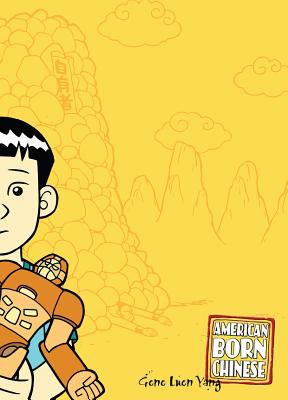
American Born Chinese by Gene Luen Yang


Aristole and Dante Discover the Secrets of the Universe by Benjamin Alire Saenz 


Ms Marvel by G, Willow Wilson


Nation by Terry Pratchett 


Scythe by Neal Shusterman 


Uglies by Scott Westerfeld 


Thursday, August 10, 2017

Top Ten for Ten – Indigenous children’s literature


I love this event. #pb10for10 is such a great way to see what teachers, librarians and others who use children’s literature are reading and teaching with. I always collect a large number of titles from these lists and sometimes, new ideas about using the books, too. 


The premise is to list your 10 best picture books. These can be the 10 picture books you love most in the world. Or the 10 best picture books connected to a specific topic. Or it might be the top 10 authors of picture books. Or any other top 10 theme you might want to create.

I encourage everyone to visit and browse through these lists.

Last year I created four Pinterest boards that support a course in the education undergraduate program focusing on First Nations, Metis and Inuit peoples. One of the assignments has students evaluating children’s literature. The Pinterest boards lists books for different grade levels for both fiction and nonfiction.

And, so here’s my list for this year’s Top Ten on the Tenth Event.

A Coyote Columbus Story by Thomas King, illustrated by William Kent Monkman
This is not your typical Christopher Columbus story. It presents a native perspective about the arrival of Chris with Trickster Coyote responsible for the whole terrible mess. She only wants to have some people to play baseball and instead creates a group of greedy, ill-mannered thieves. Very interesting illustrations. The book can be used with younger grades but I think older students will have a rich opportunity for deconstructing it.

I am Not a Number by Jenny Kay Dupuis and Kathy Kacer, illustrated by Gillian Newland 
This picture book is based on the author’s grandmother’s experiences in a residential school where she endured many horrific hardships. Recommended for upper elementary grades.

Jingle Dancer by Cynthia Leitich Smith, illustrated by Cornelius Van Wright and Ying-Hwa Hu
This book demonstrates a wonderful sense of community of support as a little girl from the Muscogee Nation looks to create a dress to wear for a jingle dance. Family and friends all contribute jingles from their own dresses to help Jenna. Recommended for early elementary grades.

Mwakwa Talks to the Loon by Dale Auger 
Mwakwa is a skilled hunter who provides many essential supplies for his village. But he becomes conceited after receiving much praise from the other villagers and loses his ability to talk to the animals he has always hunted. This traditional story speaks to the importance of being humble about one’s abilities and respectful of the sacrifices others make for the greater good. Recommended for elementary grades

Orca Chief by Roy Henry Vickers 
I am a big fan of this illustrator’s work. In this traditional story, we learn about respecting nature. When a group of men are careless about how they treat the ocean the chief of the orca whales teaches them how to sustainably harvest food from the ocean. It's about being respectful and thankful for what the earth provides us. Stunning illustrations with Northwest Coast aboriginal motifs.  Recommended for elementary grades.

Based on the author’s grandmother’s experiences facing adversity and racism, this picture book shares a unique perspective about resiliency. Recommended for elementary grades.

Secret of the Dance by Andrea Spalding 
A boy sneaks out one night to watch a potlach, a ceremony forbidden by the Canadian government. Those involved risk arrest, confiscation of artifacts and even their children by participating. Recommended for elementary grades.

Thunder Boy by Sherman Alexie 
This one is all about identity, individuality and wanting to be recognized for one’s own abilities. Little Thunder is named after his father which he finds frustrating. He wants a name for himself that acknowledges who he is. Yet, at the same time, he worries about hurting his dad’s feelings. Recommended for primary grades.

What’s the Most Beautiful Thing You Know About Horses?By Richard Van Camp, illustrated by George Littlechild 
When you live in a small village where horses are not all that prevalent, how would you describe one? One cold day when there is nothing better to do, a young boy asks different family and friends what they think about horses. The illustrations are a really strong element in this picture book. Recommended for primary grades.

Wild Berries by Julie Flett 
What could be better than being outdoors picking wild blueberries with your grandmother? For this boy, exploring the forest and observing wildlife, it’s an enjoyable and educational experience. Swampy Cree words are included identifying the various things that the pair see.  Recommended for primary grades.


Monday, May 9, 2016

Copyright 2015 -Really!

I really, really wanted to give Timeline: a visual history of our world by Peter Goes a rave review.

It was going to include: “fantastic graphics”, “wonderful design”, “beautifully produced” and “interesting if random selection of facts”.  I particularly liked the black band that runs across the middle of every page where all the events take place. It conveys the fluidity of time and how time periods merge and evolve.  It starts with the big bang, covering the beginning of life on earth, the age of dinosaurs, early hominids, early civilizations mostly in Europe and central Asia moving through the centuries up until the 2010s. (Whew! It’s quite a ride.)

And all of these observations are still valid.

It is an oversized, beautifully produced and designed book. I love the illustrations.  This is a great book for browsing. There’s lots to look at and minimal text.  It is fun to find small comical drawings (look for Big Foot in northern Canada), but --

But…

I was kind of willing to overlook how the perspective was predominantly Euro-centric  until I noticed a couple of graphics portraying the aboriginal peoples in North America.

Sigh.

I’m having a problem with the images selected for the pages Explorers from All Periods and North America in the 18th Century. The images in the Explorers panel places a tepee, a seated Native with a feathered headdress, smoking a pipe, a woman with a baby strapped to her back and a totem pole all placed smack dab in the middle of the United States. The images in the 18th Century panels show several tepees and almost every single Native sports a feather in their hair. And again a totem pole is placed next to the teepees and herd of buffalo. Problematic, anyone?

I realize that any timeline that undertakes representing the history of the world in 73 pages is huge. This means that not all significant events will make the cut. It also means the illustrator will want high recognition factor from the images so that text is minimal and space is maximized. I would agree that these images are very recognizable but totem poles were not part of the indigenous cultures located on the plains of America. There were carved by the peoples living along the northwest coast of North America. The feathered-headdress, peace-pipe smoking Indian is such an overused stereotype and cannot represent the all North American indigenous peoples.  In a word, inappropriate.

This is my main beef with this book.  I know my perspective is based on becoming very aware of how indigenous peoples have been, and sometimes, still are depicted in children’s literature.

I’m not recommending this book outright but I’m not condemning it totally either.  I do think it could be useful in classrooms with careful teaching. Discussing what these images represent, how they are misleading and why other choices would have been better, becomes an opportunity to talk about stereotypes.

I think the best way this book can be used in a classroom is by looking at what constitutes a timeline, the significant events that were selected for their defined time periods, what they included (the first James Bond movie) and excluded (Arab Spring) and have students research their importance or perhaps figure out what events they would include, as well.  I think grades 6 and up may find this book useful.


Monday, April 18, 2016

Nonfiction Roundup

As life in the Doucette Library is becoming quieter with teacher-education students out on practicum, I’m getting caught up on some reading.

Today I’m highlighting some interesting nonfiction books for all levels.

Elementary


A Place for Turtles by Melissa Stewart
Despite the commercialism of the jingle, “I love turtles”, I do, in fact love real turtles. They are fascinating creatures and this book lays out many interesting facts about various species of turtles predominately found in the United States. Along with these facts are the conditions and challenges that turtles face today. The illustrations are well done and provide abundant details about what the turtles look like and their habitats. It emphasizes the interconnectedness within ecological systems and the importance of protecting turtles.

What an interesting story! This is about a young man from Ghana who overcomes a physical challenge and societal prejudices proving that “disability does not mean inability”.  Born with only one strong leg Emmanuel had to learn to do things for himself fairly quickly. He learned to carry water and climb coconut trees.  He hopped two miles each way to get to school. He learned to make friends when the other kids didn’t want to play with him.  He was resourceful and resilient. As a young man he decides to honour a promise he made to his dying mother by cycling close to 400 miles across Ghana to spread his message that “disable does not mean being unable.” Loved it.

This book also explores the life of an artist who lives with what could have been a debilitating condition, going blind at a young age, but ends up becoming a world class runner and renowned artist. It’s an interesting story with good classroom potential to teach about resiliency, inclusion, and art.  I did find the writing somewhat abrupt, a little choppy with no sense of what the time line was for George’s life.

Middle School

Another fascinating look at an atypical childhood. We are introduced to Marie Ahnighito Peary, born in a shed in Greenland in 1893, the daughter of a naval office obsessed to become the first person to reach the North Pole. Marie and her mother were often willing participants of Peary’s expeditions (and there were many) that placed them far from Washington D.C. society and living in the high Arctic with sailors, explorers and local Inuit people. Marie was adventuresome and saw her father as a hero for trying to attain his goal. There are lots of photos of Marie, her family, the ships she sailed on and various locales that are mentioned in the text. The book has a lot of text which may put off younger or struggling readers but the story here is so interesting that it’s worth having in the classroom.

“Is this for real?” asked my partner when he saw this book sitting on the coffee table at home. That’s exactly what I thought when I came across this one, too. I had no idea that so many attempts had been made by so many innovators to construct a vehicle that would allow a car to fly or a small aircraft to drive like a car.  Many configurations of areocars have been designed between the early 1900s and today. It’s a fascinating idea that sparks the imagination but within a heartbeat raises a myriad of questions about the challenges of just anyone flying/driving a vehicle. Nevertheless, a really cool idea.

Secondary


Okay, I’m going to fess up that I haven’t read all of this one – yet. This is an interesting, well-written account of the practical and societal issues about garbage.  What drew my attention to this book was an article that came my way about Boise High School using this book to engage its student body with reading and sustainability issues. Check out the article to read more about this initiative or read about the school's objectives for this project here. I love the idea that this sort of enterprise can have such a big payout for both literacy and social change in a school setting. This is an interesting and informative read that really does impact all of us.

Monday, May 4, 2015

Residential schools, resiliency and reconciliation

Currently on display at the Calgary Public Library, is a unique art installation known as The Witness Blanket.   

  
“The Witness Blanket stands as a national monument to recognise the atrocities of the Indian Residential School era, honour the children, and symbolise ongoing reconciliation.”

 You will see a diverse range of artifacts arranged to represent a quilted blanket.  Items included are door knobs and handles, bricks, old painted wood, children’s skates, bowls, school badges, children’s beaded moccasins, letters, photos, a door from an infirmary, religious statues, part of a piano keyboard and even a couple of braids of hair.  These are only some of the items that have been collected from various residential schools, churches and other government buildings from across Canada.  The whole installation stands above several volumes of Canadian statues that include the Indian Act from 1857 to 1938.


The Witness Blanket is on display until May 9th.  There is a free app that can be downloaded from the Apple store that is well worth getting.  Each artifacts is described and located on a map of Canada and will add even more to viewing.


What a powerful piece of art to tie into literature relating the experiences of some of these survivors.


Very recently, I read The Education of Augie Merasty: a residential school memoir by Joseph Auguste Merasty with David Carpenter.  This short but essential volume is a collection of Augie’s memories of living at St Therese Residential School, in Sturgeon Landing, Manitoba. Many of the nuns and priests treated the children brutally, regularly subjecting Augie and the other children to cold, hunger, verbal and physical abuse, and sexual assault.


I found the introduction and other content supplied by David Carpenter interesting, too.  Where Augie tells of his childhood memories, David gives us insight into the man that he becomes.  In the decade that it took for David to collect these stories we learn of the many ups and downs that befall Augie.  His voice is always strong sometimes with tinged with humor and even regard for some of his kinder teachers.


I’m recommending this title for high school students and older
.

This book was recently featured on the CBC’s radio program, The Current.  Click here to listen to the interview with David Carpenter.  

Template Design | Elque 2007