Monday, August 15, 2016

Wrap up for Picture Books Top 10 on the 10th

Last week I took on the challenge of listing my top 10 picture books in the meme Picture Book Top 10 for 10th Event. I encourage you to pop by and browse through some of these lists. It's good fun to see what makes these lists and how creative educators are.

As always, I struggled to list only 10 and decided to focus on a theme versus just my favourites. The theme focused on some of my favourite Canadian authors and illustrators instead was sort of a compromise. Only 10 writers but I sometimes included more than one of their books. I guess that might be considered cheating rather than a compromise -- but really who's counting? 

But taking part in this meme is a really fantastic endeavor as I'm able to glean a number of titles of picture books that are favourites of other teachers and librarians. They are often generous enough to include bits of information about how they use these titles, too.

I wanted to wrap up this experience by listing a few of these new titles that I'm now eager to bring into the Doucette Library for the upcoming year.

Here are my top 10 choices: 

Ada Twist, Scientist by Andrea Beaty


They All Saw a Cat by Brendan Wenzel


The Whale by Vita Murrow


The Stick by Clay Rice


Octicorn by Kevin Diller


Explorers of the wild by Cale Atkinson


What to do with a box by Jane Yolen


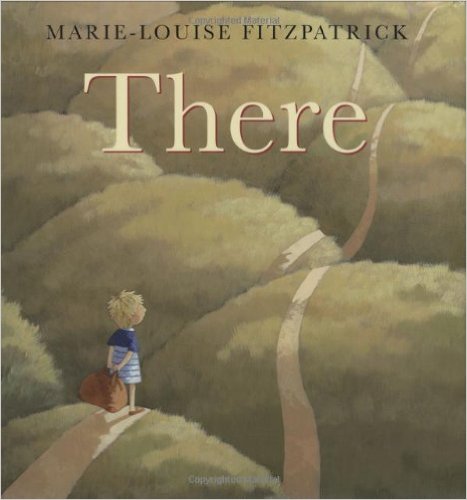
There by Marie-Louise Fitzpatrick


Running the Road to ABC by Denize Lature


More-igami by Dori Kleber


Okay, one more to keep the cheating even:


Brief Thief by Michael Escoffier

Wednesday, August 10, 2016

Picture book Top 10 on the 10th - The World needs more Canada


It’s August 10th today and that means I’m participating in the Picture Book Top 10 for 10th Event once again. This is an annual event co-hosted by Cathy Mere of Reflect & Refine and Mandy Robek of Enjoy and Embrace Learning celebrating the top-picks, can’t-live-without picture books of blogging teachers, librarians, and other keeners who appreciate children’s literature. I’ve participated in a few of these events and always make a point of stopping by even when I don’t post a list of my own. I never come away disappointed, only with many, many recommendations of titles, new and old. Please stop by and take a gander at this diverse list. 

"The World Needs More Canada"

I decided to answer this call with my list today and focus on the Canadian authors and illustrators whose books continually appear in my workshops for student-teachers. These books often speak to something specifically ‘Canadian’ but for the most part I select them because they tell good stories or the illustrations are stunning, clever, beautiful or all three. In making my list there were a few who got cut only because we are limited to selecting ONLY TEN! Rest assured I've many more favourites that could have easily made the list.


So in no particular order, first up is Marie-Louise Gay. 


I've been a long time fan of this author-illustrator and am particularly partial to her series about Stella and her brother Sam. Stella is an older sister who is more than willing to answer and reassure Sam about the things he wonders and worries about. I love the whimsical illustrations and the affectionate relationship that comes across between these two characters. I would also recommend her book Any Questions? which addresses the many questions children often ask authors about writing books. 

Second is Tomson Highway.


I love the trilogy he wrote about a Cree family living in Northern Manitoba. The series includes Caribou Song (2001, 2013), Dragonfly Kites (2002, 2016) and Fox On the Ice (2003, 2010). Each book lets the reader look into a very different way of life that engenders a love of the land and family. The focus on a First Nations family 'shows' us how they lived without having to 'tell' us. These are bilingual books written in Cree and English.


Third is Ted Harrison.

Ted Harrison's art is very well known and easily identifiable.  He has illustrated two Robert W. Service poems about the far north, The Shooting of Dan McGrew and The Cremation of Sam McGee which are popular in schools. I often bring out Harrison's O Canada, an illustrated version of the national anthem. Each spread of pages captures evocative and iconic images of each province and territory; open spaces in the prairie provinces, the mountains in Alberta, the vast depths of ocean waters for the coastal provinces are just a few examples.


Fourth on my list is Melanie Watt.

Another author-illustrator, she is well known for a series of books featuring the most anxious, paranoid, safety-obsessed rodent you'd ever hoped to meet -- Scaredy Squirrel. I'm a wee bit more partial to Chester, a cat with authorial aspirations who will do anything to hijack Melanie's latest book. It's fun and cheeky besides having some classroom potential, as well.


My fifth author to note is Richard Van Camp.


I love this author for his storytelling ability, hands-down. Whether you are reading his books or listening to him as a presenter you will be easily caught up in the characters and places he's introducing us to. Two of his picture books for older readers that I often showcase for student-teachers are What's the Most Beautiful Thing About Horses? and A Man Called Raven. Van Camp is very much into incorporating traditional Native perspectives and values into his stories. He's is a Tłı̨chǫ writer from Fort Smith, Northwest Territories.


Sixth up is Frank Viva.

I love his retro-style illustrations and the concepts behind Along a Long Road and A Long Way Away. Lots of playful language and interplay between words and images. Whereas Young Frank, Architect plays with the idea of differences in perspective. This one is a good one for units about building things in elementary science and STEM classrooms.
.


Number seven on my list is Roy Henry Vickers

This Northwest Coast artist illustrates traditional stories like Raven Brings the Light and Cloudwalker that relates how the three largest salmon-bearing rivers in British Columbia came to be. The artwork is simply stunning with vibrant colourwork incorporating Northwest Coast iconography.


The eighth Canadian author I'd recommend is Rukhsana Khan.


 I first read The Roses in My Carpets back in the late 90s. Her story of refugees living in a camp and yearning for a better life resonants even more strongly for me now than it did back then. Others of her books that I promote in workshops with students are books that feature everyday concerns for children such as learning tolerance and sharing with a younger sibling (Big Red Lollipop) and overcoming fears (The Ruler of the Courtyard).


Ninth on my list is Rob Gonsalves.

He's best known for his Imagine a... series of books that play with our visual perspective of common and uncommon scenes. My favorite is his first book, Imagine a Night. The cover gives you a sense of what this might look like. Until you look closely at the picture you see the reflection of coniferous trees backlit by the moon. But the reflected trees turn out to be a woman carrying a lantern coming from the water instead. The pictures can be surprising, amusing and eerie. Others in the series include Imagine a Day, Imagine a Place and most recently, Imagine a World.


And, the tenth Canadian author I urge you to check out is Paul Yee.


Many of his books appear in my workshops because his strong storytelling shows us life in Canada as a Chinese immigrant. Many of his stories are historical and are great to tie-in with the social studies curriculum in Grade 5. The Ghost Train and Roses Sing on New Snow are two that I use frequently.

So, how about it?  Have I given you a few new Canadian authors to check out? Or maybe I just reminded you of some books that you might just have to revisit. New or old these authors and illustrators are well worth becoming acquainted with.

PS. I know this 'looks' like more than 10 but count'em.  There's really only 10 authors. Just don't count the number of actual books, okay?  

Monday, May 9, 2016

Copyright 2015 -Really!

I really, really wanted to give Timeline: a visual history of our world by Peter Goes a rave review.

It was going to include: “fantastic graphics”, “wonderful design”, “beautifully produced” and “interesting if random selection of facts”.  I particularly liked the black band that runs across the middle of every page where all the events take place. It conveys the fluidity of time and how time periods merge and evolve.  It starts with the big bang, covering the beginning of life on earth, the age of dinosaurs, early hominids, early civilizations mostly in Europe and central Asia moving through the centuries up until the 2010s. (Whew! It’s quite a ride.)

And all of these observations are still valid.

It is an oversized, beautifully produced and designed book. I love the illustrations.  This is a great book for browsing. There’s lots to look at and minimal text.  It is fun to find small comical drawings (look for Big Foot in northern Canada), but --

But…

I was kind of willing to overlook how the perspective was predominantly Euro-centric  until I noticed a couple of graphics portraying the aboriginal peoples in North America.

Sigh.

I’m having a problem with the images selected for the pages Explorers from All Periods and North America in the 18th Century. The images in the Explorers panel places a tepee, a seated Native with a feathered headdress, smoking a pipe, a woman with a baby strapped to her back and a totem pole all placed smack dab in the middle of the United States. The images in the 18th Century panels show several tepees and almost every single Native sports a feather in their hair. And again a totem pole is placed next to the teepees and herd of buffalo. Problematic, anyone?

I realize that any timeline that undertakes representing the history of the world in 73 pages is huge. This means that not all significant events will make the cut. It also means the illustrator will want high recognition factor from the images so that text is minimal and space is maximized. I would agree that these images are very recognizable but totem poles were not part of the indigenous cultures located on the plains of America. There were carved by the peoples living along the northwest coast of North America. The feathered-headdress, peace-pipe smoking Indian is such an overused stereotype and cannot represent the all North American indigenous peoples.  In a word, inappropriate.

This is my main beef with this book.  I know my perspective is based on becoming very aware of how indigenous peoples have been, and sometimes, still are depicted in children’s literature.

I’m not recommending this book outright but I’m not condemning it totally either.  I do think it could be useful in classrooms with careful teaching. Discussing what these images represent, how they are misleading and why other choices would have been better, becomes an opportunity to talk about stereotypes.

I think the best way this book can be used in a classroom is by looking at what constitutes a timeline, the significant events that were selected for their defined time periods, what they included (the first James Bond movie) and excluded (Arab Spring) and have students research their importance or perhaps figure out what events they would include, as well.  I think grades 6 and up may find this book useful.


Monday, May 2, 2016

Sync Audiobooks

This is my yearly public service announcement about the fantastic opportunity to download audiobooks for FREE!


Starting this Thursday, May 5th listeners have the opportunity to download paired audiobooks from SYNC, Audiobooks for Teens.

First up are: 


The Great Tennessee Monkey Trial by Peter Goodchild 
with
Vivian Apple at the End of the World by Kaite Coyle.

SYNC offers 2 FREE, unabridged, high-interest audiobooks each week, May 5th until  August 18th, 2016.

Sign up to receive email or text alerts and download each title. Easy-peasy. No strings attached. Is that awesome or what?

Click here or on the image in the right hand column to get to their website.

Sync
     

Monday, April 25, 2016

Evocative artifacts

The Great War: stories inspired by items from the First World War written by many beautiful authors, David Almond, John Boyne, Tracy Chevalier, Ursula Dubosarsky, Thothee de Fombelle, Adele Geras, A.L. Kennedy, Michael Morpurgo, Marcus Sedgwick, Tanya Lee Stone and Sheena Wilkinson.  Illustrated by Jim Kay. Quite the line-up, wouldn't you say?

The title pretty well describes the premise of this collection of short stories; 11 stories based on a specific object that connects in some way to World War I and evokes a time, a place and a prompt for the imagination that takes us, the reader, there.

These items are a Brodie helmet, a compass, the nose of a Zeppelin bomb, a recruitment poster, a Princess Mary’s gift fund box, a soldier’s writing case, sheet music, a butter dish, a Victoria Cross, school magazines, and a French toy soldier.

It may be that your own imagination is stirred just contemplating what the stories might be.

The Brodie helmet becomes a way for family to reconnect to a great-great-grandfather who died too young; the writing case a way for a class of children to understand the waste of war and the bravery needed to create a new world; a compass that provides a melancholy focus for a severely injured soldier who may be able to find the missing pieces once the doctors from the Tin Noses Shop get to work; or how a brass horn literally saved the life of a musician/soldier from the 369th Infantry Regiment, the Harlem Hellfighters.

Each story is very well told. The book is beautifully designed and illustrated. All the artifacts are written about in the back of the book to provide a little more context. This small weighty book will leave readers with lots to think about.

This would be a terrific book to use to model developing a story around an artifact. A co-worker suggested that immigrant families often have keepsakes with interesting stories and may provide inspiration for exploring family history, traditions and culture.


Recommended for thoughtful, strong readers grades 5 and up. I think that older students will take away more from these stories than younger students, however. 


Monday, April 18, 2016

Nonfiction Roundup

As life in the Doucette Library is becoming quieter with teacher-education students out on practicum, I’m getting caught up on some reading.

Today I’m highlighting some interesting nonfiction books for all levels.

Elementary


A Place for Turtles by Melissa Stewart
Despite the commercialism of the jingle, “I love turtles”, I do, in fact love real turtles. They are fascinating creatures and this book lays out many interesting facts about various species of turtles predominately found in the United States. Along with these facts are the conditions and challenges that turtles face today. The illustrations are well done and provide abundant details about what the turtles look like and their habitats. It emphasizes the interconnectedness within ecological systems and the importance of protecting turtles.

What an interesting story! This is about a young man from Ghana who overcomes a physical challenge and societal prejudices proving that “disability does not mean inability”.  Born with only one strong leg Emmanuel had to learn to do things for himself fairly quickly. He learned to carry water and climb coconut trees.  He hopped two miles each way to get to school. He learned to make friends when the other kids didn’t want to play with him.  He was resourceful and resilient. As a young man he decides to honour a promise he made to his dying mother by cycling close to 400 miles across Ghana to spread his message that “disable does not mean being unable.” Loved it.

This book also explores the life of an artist who lives with what could have been a debilitating condition, going blind at a young age, but ends up becoming a world class runner and renowned artist. It’s an interesting story with good classroom potential to teach about resiliency, inclusion, and art.  I did find the writing somewhat abrupt, a little choppy with no sense of what the time line was for George’s life.

Middle School

Another fascinating look at an atypical childhood. We are introduced to Marie Ahnighito Peary, born in a shed in Greenland in 1893, the daughter of a naval office obsessed to become the first person to reach the North Pole. Marie and her mother were often willing participants of Peary’s expeditions (and there were many) that placed them far from Washington D.C. society and living in the high Arctic with sailors, explorers and local Inuit people. Marie was adventuresome and saw her father as a hero for trying to attain his goal. There are lots of photos of Marie, her family, the ships she sailed on and various locales that are mentioned in the text. The book has a lot of text which may put off younger or struggling readers but the story here is so interesting that it’s worth having in the classroom.

“Is this for real?” asked my partner when he saw this book sitting on the coffee table at home. That’s exactly what I thought when I came across this one, too. I had no idea that so many attempts had been made by so many innovators to construct a vehicle that would allow a car to fly or a small aircraft to drive like a car.  Many configurations of areocars have been designed between the early 1900s and today. It’s a fascinating idea that sparks the imagination but within a heartbeat raises a myriad of questions about the challenges of just anyone flying/driving a vehicle. Nevertheless, a really cool idea.

Secondary


Okay, I’m going to fess up that I haven’t read all of this one – yet. This is an interesting, well-written account of the practical and societal issues about garbage.  What drew my attention to this book was an article that came my way about Boise High School using this book to engage its student body with reading and sustainability issues. Check out the article to read more about this initiative or read about the school's objectives for this project here. I love the idea that this sort of enterprise can have such a big payout for both literacy and social change in a school setting. This is an interesting and informative read that really does impact all of us.

Template Design | Elque 2007