Monday, October 8, 2018
I’ve been extremely busy the last few weeks teaching various
library workshops. One of my favorite
ones is for Interdisciplinary Learning. This workshop lets me introduce
student-teachers to some really fantastic resources from the Doucette Library’s
collection.
Showcasing resources is only part of what the workshop is
about, though. We talk a lot about concepts and conceptual thinking. Concepts
often will facilitate connections between disciplines. The Arrival by
Shaun Tan is an example of a resource with a plethora of concepts associated
with the story. Check out this wordless, graphic novel about a man who leaves his family to settle in a new country with the intention of giving them all a
better life. The brilliance of the book is placing us in the same situation as
this man as he struggles to find his way in this sort-of-familiar-yet-very-different
environment. We, too, struggle to make
sense of what’s going on. Conceptually, there is so much to dig into like immigration, power, identity, family, community,
communication, conflict and so many more.
Today, a new book arrived called Our Planet by Jimi
Lee. It’s an older title that I hadn’t
come across until now but was thrilled to find.
Maybe it’s just because I’ve been immersed in conceptual
thinking for the last several weeks but I see this small board book filled with
concepts that will work at the classroom level.
It starts with a small single plant growing along the edge
of a hole (an actual hole has been die-cut into the centre of the book to
represent the earth). As we flip pages we see more plants/trees growing, then a
tree cutter starting to cut them down and houses popping up. After the houses, we see tall buildings taking over and then industrial buildings encircling the
earth/hole. The cost of progress, however, is overwhelming refuse and pollution, which in turn, impacts the natural world causing glaciers to melt to the point
where there is extreme flooding. Turn the page and a girl and a boy begin to
scatter seeds and the cycle begins again with new plant growth. But instead of
over-exploitation of resources and total domination over the environment this
world is depicted with more balance.
Trees, plants, animals, houses, and buildings can co-exist with each
other.
There are so many concepts embedded within Our Planet: cause
and effect, change and continuity, transformation, sustainability, regeneration,
balance, harmony to name the ones that came to mind for me.
One possible design flaw is a page (paper not cardboard) that comes at the end of the book with a message from Jane Goodall. My copy arrived damaged and without this page so I didn't even know it was missing the first time I looked at it. Because of the die-cast hole in the middle the book the paper page is at risk to be damaged. I think... I haven't seen the undamaged book yet.
I would recommend this book for all grade levels even without the message from Jane Goodall.
Monday, September 10, 2018
Making friends
With a new school just starting there are lots of lists that
talk about first day jitters and some of the worries children having when
starting school.
My list is looking at the jitter that relates to making new
friends especially when you’re the new kid on the block. I’ve found books that span the grade range 1 to 12, in various formats (novel-in-verse, graphic novels, picture books), and with diverse representation of kids.
Please feel free to add your recommendations in the comments section.
Have a great school year, Everyone.
Primary grade – picture books
One of Us by Peggy Moss
Nerdy Birdy by Aaron Reynolds
A Tiger Called Thomas by Charlette Zolotow
Lila and the Crow by Gabrielle Grimard
Stick and Stone by Beth Ferry
Middle School – novels, picture books, nonfiction
From There to Here by Laurel Croza
El Deafo by Cece Bell
Full Cicada Moon by Marilyn Hilton
If I Ever Get Out of Here by Eric L. Gansworth
Secondary Level – novels, graphic novels
Alice, I Think by Susan Juby
Posted by Tammy Flanders at 6:00 AM 0 comments
Labels: graphic novels, humour, novels, picture books, pleasure reading
Monday, August 20, 2018
Seasonal changes and the moon
We’re on the cusp of starting a new school year which for me
feels more like the ‘new year’ than the one we start on January 1st. A new school year also connects very strongly
with seasonal change; Fall is not far off.
We can often see the early signs that cooling temperatures and less
light bring to the natural world. Trees
and other plants change colour, drop leaves and flowers and slowly begin to die
back. Animals and birds start to
migrate, change colour or grow thicker coats.
It’s all about seasonal change.
Taan’s Moons: a Haida Moon Story by Alison Gear and
illustrated by Kiki van der Heiden with the Children of Haida Gwaii, beautifully
illustrates seasonal change in a specific area, the northwest coast of British Columbia.
This book looks to present traditional Haida Gwaii knowledge
that has been passed down through oral tradition and varies between villages,
clans, families and language groups about the Haida moon cycle.
Each double page spread features one of twelve different
moons spanning a year. Bear Moon, Snow Moon and Bears Hibernate Moon occur
during the winter months, for example. Each title is in English, Skidegate
Haida and Old Massett Haida. Every moon has a four line poem that speaks to the
essence of that time period as it relates to the life of a bear.
Bears Hibernate Moon is described as,
Taan lumbers up the
mountain;
hemlock curtains
close.
She crawls into a dent
or roots,
and then begins to
doze.
The illustrations have been co-created by Kiki van der
Heiden and primary grade children from various schools in the Haida Gwaii area,
using felt. The illustrator states, “the
images that bring this story to life have come from the children’s
imaginations, and have been enthusiastically and lovingly created by them, with
final touches respectfully applied by Kiki.”
Great care has been given to recognizing everyone involved
in this project, appreciation for the traditional stories and the Indigenous
people who tell them. The book includes a forward (by Richard Van Camp), a
preface, back notes honouring contributors, artists and other participants of
which there were many, a note about Haida language, a note about the
illustrations and credit for where “a
written record of this particular cycle can be found.”
This is a lovely book that works across content areas
embedding Indigenous knowledge and connecting to nature. What better way could there be to learn about
culture, science, nature, art, story, poetry and language?
I recommend this one for elementary grades.
Posted by Tammy Flanders at 6:00 AM 0 comments
Labels: animals, cross-curricular, First Nations peoples, indigenous peoples, picture books, science
Friday, August 10, 2018
Top 10 on 10 – The picture book fiction edition
Well, I’m back from holidays and what better way to get back
into the swing of things but by highlighting some of my favorite picture
books.
For the last several years, I’ve participated in the Top 10 on 10 event where bloggers and other types of children’s literature aficionados
recommend their favorites picture books. It can be a nail biting experience as you try
to figure out how to rave about only 10!
count’em 10! books when really you could rave about 100s. But it’s a
great exercise and I always come away with so many new (and old) titles that I
know will be of interest to the student-teachers who use the Doucette Library.
I decided to focus on a theme and because I’m still in
holiday mode decided to highlight mystery and detective stories. I do love
mysteries and it’s what I typically read when I’m not working. The following is my list of books some, new and some oldies-but-goodies which keep me guessing and leave me in
awe of remarkable observation and deductive reasoning skills.
Hermelin the Detective Mouse by Mini Grey
Whether you’ve lost a pair of eyeglasses, a cat or a
goldfish, Hermelin is on it. A master of observation, he finds all that is lost
for those living in his neighbourhood. The gratitude of these neighbours turns
to shock and horror when they realize he’s a mouse. All except for one aspiring
detective…
Who Pushed Humpty Dumpty? And other notorious nursery tale mysteries
by David Levinthal and John Nickle
Who knew that Fairy Tale Land was a hot-bed of crime? Five
classic fairy tales are framed as if a crime has been committed and it’s up to Officer
Binky to save the day. Goldilocks is behind bars for breaking and entering. In
the case of Hansel and Gretel, killing the witch was a clear case of self-defense. Humpty
Dumpty was pushed and will not be living happily-ever-after. Snow White will no
longer have to fear for her life from the evil, vain queen. And figuring out
what the real story behind Jack, his beanstalk and the goose who can
lay golden eggs is all in a day’s work for Officer Binky.
Pigeon P.I. by Meg McLaren
Another noir-type detective story involving an old-timer and
a keen youngster looking to crack the case of missing birds. Did they fly the
coop? Or, is there some other nefarious plan about to hatch?
Apparently, this one was inspired by true events. Ten sheep
go missing and it’s up to Doug, the sheep dog to find out where they went. “Careful” deduction indicates that Wolf
living in the Dark Forest is responsible. But as will all good mysteries,
things are not what they seem. The twist is – well, you’ll just have to read
and find out for yourself. The illustrations are a treat.
Piggins by Jane Yolen
This one falls into the classic category for me. In this
case, “the butler did it” refers to the butler solving the mystery of the stolen diamond necklace belonging to his employers. I love the early 1900s vibe and
details.
The Eleventh Hour by Graeme Base
If you love solving puzzles then this one’s for you. Every
page has clues and codes to be figured out. The illustrations are detailed and
will give you a run for your money. The answers are provided in the back of the
book.
Detective LaRue: Letters from the Investigation by Mark
Teague
The LaRue dog books, are
hilarious! In this caper, LaRue is accused of catnapping a neighbour’s two felines.
As he explains to his human who’s on vacation, writing her frequent postcards
it’s all a big misunderstanding. It’s up to LaRue to find the cats and perhaps,
those responsible for the crime spree that is spreading through town that
started the same night the cats went missing. Coincidence? I think not!
Mystery at the Club Sandwich by Doug Cushman
I love this noir mystery for the puns it works into the
narrative. (See title.) We have an elephant
detective who “works for peanuts”, a chanteuse whose “lost her marbles”… you
get the idea. This one works through the clues and a list of suspects in a pretty linear
way. The black and white illustrations add to the atmosphere of a gritty 30s
noir flick.
The Mysterious Collection of Dr. David Harleyson by Jean
Cassels
Ever notice how many picture book mysteries and detective
stories feature fairy tale and nursery rhyme characters? Well, this one feels
like it’s a bit of a pop quiz. A traveling painter requests that his family
return several portraits he’s painted to their owners. There are clues attached
to each painting that will help with this task. This one will appeal to kids
who really like fairy tales.
The Mysteries of Harris Burdick by Chris Van Allsburg.
My last recommendation is not so much a mystery but
definitely falls into the category of mysterious. The set-up is an illustrator,
Harris Burdick, dropping off a portfolio of his illustrations to a children’s book
publisher. It features a single picture from several different stories with only
a title and a caption to give us a clue about what’s going on. Each picture has
some element of spookiness, creepiness or intrigue. It leaves the reader
wanting to know what the stories are about and what happened to Harris Burdick.
He never did return to pick up his illustrations.
So, there’s the list for this year. Please check out some of
the other blogs and lists for going to 2018 #pb10for10. You won’t be disappointed.
Posted by Tammy Flanders at 8:30 AM 12 comments
Labels: picture books, Top 10 on the 10th event
Monday, June 18, 2018
At the Mercy of Mother Nature
Volcanoes have been making the news lately with the Big
Island of Hawaii and Guatemala reeling from the devastation caused by recent
eruptions and a skeleton found underneath a large rock in Pompeii that had been
jarred loose when Mount Vesuvius let loose in 79 A.D. Geology rocks! (Pun
intended.)
Because erupting volcanoes can be such a dramatic and, sometimes, traumatic event, it can capture the imagination especially for young
readers. There are a number of books
that I recommend to support this interest and learning for a budding geologist.
Here are a few of my top picks:
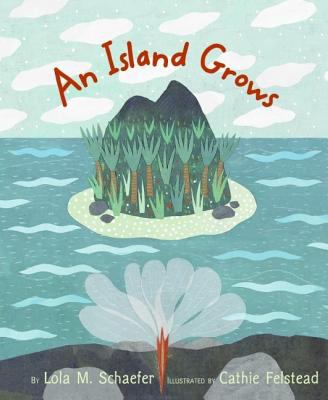
An Island Grows by Lola M Schaefer
A picture book for the primary grades that shows how an
underwater volcanic eruption can be the starting block of new land mass being
created. Over a long period of time, this mass of rock will result in new land
being formed that will eventually allow life to take hold and begin to
flourish. Told in rhyme with very few words it captures the dynamic nature of
Earth and that things are changing all the time. The concept of ‘geological time’ may be
difficult grasp from this book as this process is not a quick process.
The next two books I recommend are from the Scientists
in the Field series. I love
this series. It is fantastic and I highly recommend it.
The first one is Life on Surtsey: Iceland’s Upstart Island
by Loree Griffins Burn. It is perfect for middle grades to see how new land off
the coast of Iceland is being ‘colonized’ by plants and animals. This has become an opportunity for scientists
to observe this process as it happens in front of them.
The second book is Eruption!: Volcanoes and the Science of
Saving Lives by Elizabeth Rusch. This books looks at how scientists are able to
prevent loss of life for populations living near active volcanoes around the
world. Science is a critical tool for predicting when a volcano will erupt to give
people enough notice to evacuate regions that will be hit with ash, lava, gases
and related earthquakes.
Into the Volcano: a Volcano Researcher at Work by Donna
O’Meara conveys the passion that volcanoes can ignite (no pun intended, here)
in people. O’Meara’s life work is
tracking volcanos around the world to study and understand them better and to
help people who live in the vicinity of active volcanoes. As she describes her adventures, studying
volcanoes, we learn a lot about all facets of volcanoes along the way. Student
in middle grades will find this book appealing.
Another series that explores many different fields of
science is the Max Axiom, Super Scientist Graphic Science series. Using a comic book format, The
Explosive World of Volcanoes with Max Axiom by Christopher Harbo,
illustrated by Tod Smith will appeal to elementary level students for a basic
introduction to the different kinds of volcanoes and their characteristics.
Some of the interest about volcanoes has come from
scientists looking at historical eruptions and the impact they had on
people. The book, Bodies From the Ash: Life and
Death in Ancient Pompeii by James M. Deem shows us what Pompeii the
city looked like before 79 A.D., the eruption and then lots of pictures of the
casts that were made of the people who died there. There is a morbid
fascination with these images as we see who died and we are left to wonder about
them as well. I recommend this for grades 7 & up.
My last recommendation is The Day the World Exploded:
the Earthshaking Catastrophe at Krakatoa by Simon Winchester. This
book is an adaptation of Winchester’s adult book, Krakatoa. This renown
explosion took place in 1883 in the Sunda Strait, between the islands of Java
and Sumatra. This volcanic eruption and the after effects were felt around the
world, killing thousands of people. I would recommend this fascinating book for
students, grade 7 and up.
Posted by Tammy Flanders at 6:00 AM 0 comments
Labels: geology, historical thinking, science, scientific thinking
Monday, June 4, 2018
Inspirational Photos Instilling Wonder While Teaching
In looking closely at the three books I’m blogging about
today, I realized that there was a connection between them going beyond the
fact that these are all coffee table books filled with beautiful photographs.
The connection is that these beautiful books engage our imaginations, opening
up the worlds they present to us, provoking questions, instilling wonder and
informing us, along the way.
First up is a book published by National Geographic, Stunning
Photographs compiled by Annie Griffiths. As soon as I mention
National Geographic, you’re assured that this book will not disappoint. Divided
into six sections, Mystery, Harmony, Wit,
Discovery, Energy and Intimacy,
the photos in each embody some sense of the section’s title. I especially
enjoyed the section, Wit as there was
a great deal of humour and playful tweaking of our perceptions in these
pictures. Really lots of fun. There are hundreds of pictures in this book,
created from every corner of the world, I’m sure, and that will amaze viewers
of any age.
My next recommendation is, Microsculpture: Portraits of
Insects by Levon Biss. I
adore macro photography and this book is fantastic. Using preserved insect
specimens from the Oxford University Museum of Natural History collection, Biss
takes thousands of pictures of each insect and its parts and then reconstitutes
them to give the viewer an amazing close-up. We get to see every pockmark,
scale, whisker, hair, and ridge, plus an array of beautiful colours and shapes
of 36 insects from various parts of the world. Each insect is given a short descriptive
paragraph often discussing some weird feature and the importance of this
particular adaptation. There are some amazingly bizarre looking creatures out
there. When thinking about the number of science fiction and fantasy movies that incorporate ‘out-of-this-world’ looking
creatures, designers need go no further than Earth’s own insect population for
inspiration.
My
last selection is Through Darkness to Light: Photographs Along the Underground
Railroad by Jeanine Michna-Bales. This photographer recreated a
1400-mile journey, from Louisiana to Ontario that slaves may have taken when
trying to escape to freedom. Based on her research, she went looking to
document some of the areas that slaves and sometimes, those helping slaves
escape, would have passed through but also
convey the sense of what it might have been like traveling, mostly at night,
through unknown landscapes, living in fear of
being recaptured. The photographs are
not necessarily the most interesting as they’re often murky and show deeply
shadowed forests, meadows, and wetlands. But taken in context of a fugitive
running for their life, the book does convey
the danger, fear, and beauty that
might have been experienced. The accompanying essays also provide a lot of
interesting information about the Underground Railroad. This book will be most
effective in the classroom that is already studying American slavery and the
Underground Railroad and would be an interesting companion book to novels such as Underground
to Canada by Barbara Smucker, Crossing to Freedom by
Virginia Frances Schwartz, and A Desperate Road to Freedom
by Karleen Bradford.
I recommend all three of these books for all ages.
Posted by Tammy Flanders at 6:00 AM 0 comments
Labels: animals, art, geographical thinking, historical thinking, insects, journey, photographic books, scientific thinking
Subscribe to:
Posts (Atom)