Monday, March 9, 2015

Surreal industrial landscapes to the culture of stewardship

Wasn’t I the lucky camper last week when I attended a talk by Edward Burtynsky at Mount Royal University?  The correct answer: YES!!!

Edward Burtynsky is a photographer who looks for patterns in human behavior that have a huge and lasting impact on the landscape.

Think about the huge open mining pits in Ontario, British Columbia, or Utah.  Or the oil fields in California that cover vast areas of moonscape-like terrain. Or areas he calls ‘urban mines’ that encompass colossal mounds of tires or pyramids of stacked cubes of crushed scrap metal.

None of these are landscapes that I’d go looking for to photograph. But Burtynsky’s work captures a terrible beauty while informing us about the undeniable impact humans have on this planet.  His photographs don’t chastise but let us draw our own conclusions about the need for oil extraction, water use, transportation and our methods of production, consumption and disposal of waste.

Cover:  nickel tailings, Ontario

Manufactured Landscapes, both the over-sized coffee-table book and the DVD, draw us into our world in new ways, giving us new perspectives, whether he’s at ground level or taking aerial shots.  No one would ever argue that these are small problems but seeing these images on such a large scale, certainly and scarily, brings home this point.

Cover: Xiaolangdi Dam, China


The book, Water is available in the Doucette Library as an enhanced e-book app. Many of the images included in this book, I was lucky enough see and hear the photographer discuss in his talk last week.  But as an app, you, too, can hear the artist as he speaks to the images.  The e-book includes pop-up maps and zoom capabilities, as well. This is an intriguing format which is worth a look, but for me, it took away from the images as an artistic statement.

One question posed by an audience member at the talk, was about how he keeps going after photographing these kinds of images for over 40 years.  There is a sense of being overwhelmed by how much humans take without real consideration for short or long-term impact.  He ended on a positive note; saying that he thinks we are moving into a time when we will become better stewards of the planet and sees young people, concerned with their own healthy living, becoming more aware of quality of air, water, and food when it impacts them directly.  They will become better advocates for the environment.

Using Burtynsky’s work in a classroom would work at many levels because the images are so compelling.  Reading level is appropriate for high school and up. The images could be used in a teaching context in upper elementary and junior high school.  The e-book version of Water where sections are read out loud would be a great advantage for struggling readers.  Great opportunities for integrating content areas connecting environmental issues with social, political, geographical and scientific thinking.


Monday, March 2, 2015

Curriculum connections


From There to Here by Laurel Croza and Matt James is a terrific picture book that would pair perfectly with the Alberta curriculum for the grade 2 social studies unit about communities.  It’s the sequel to I Know Here that also fits well with this curriculum topic.

In both books, our protagonist is an observant little girl who looks at the community where she lives.


In I Know Here, she revels in the community she’s a part of in rural Saskatchewan.  Her father has been building a dam and all the members of this community are involved in the same project. She loves the forest that’s behind her trailer: the wild animals that she hears and encounters, the dirt packed road lined with trailers of her neighbours, the school with a very understanding teacher and of course, the other kids she’s come to know.  It’s a great place to live and to have adventures.  When the dam project is completed the community will disperse to pursue employment elsewhere.  Our little girl is anxious about the move to the city of Toronto.

In the second book, From There to Here she’s learning about this place and making comparisons between her last home and this new one.  There are many differences: her father doesn't come home for lunch, everyone locks their doors, the roads are paved and there are few trees. When living in Saskatchewan all the children played and hung out together doing the same thing because there were so few of them.  In Toronto, the protagonist’s brother is off with his friends to some kind of exhibition which she’s too young to attend.  Though all these differences are noted and let us know how discombobulated the little girl is, it’s when there’s a knock on the door and new-friend-to-be-made, Anne, is there waiting, that we know that life will be okay.

I did think that the first book’s description of the little rural community very evocative and could feel the girl’s pain about leaving this place behind.  The description of Toronto is less suggestive of what it’s like as its being compared to what was left behind.  The illustrations give us a better look at this neighborhood in the big city.  The second book is about the differences between the two communities but also about resiliency and adjusting to new situations.  A new friend will be a big part of this little girl’s new life in Toronto.


A word about the illustrations – wonderful.  Very childlike drawings and fanciful use of colour help convey different feelings between the two locations. 

Monday, February 23, 2015

Pink Shirt Day

Wednesday, February 25th, 2015 is Pink Shirt Day.


This is a day to commemorate anti-bullying efforts in schools and was the initiative of two students from Nova Scotia in 2013. After seeing a grade 9 boy bullied for wearing a pink shirt, they went to a local store, bought a bunch of pink tank tops and handed them out to the boys in school the next day.

Great example of student activism, wouldn't you say?

Bullying happens.  It happens a lot according to  bullying.org:

Fact: Bullying happens to someone in Canada every 7 minutes on the playground.
and
“75% of people say they have been affected by bullying.” 
–from PrevNet

We hear lots in the media about it and of some of the dire consequences that stem from bullying.  Remember Amanda Todd and Rehtaeh Parsons as two very recent stories.


Check out ToThis Day by Shane Koyczan, a book of illustrations set to his poem that speaks to the pain that comes from bullying and the heroic effort needed to overcome the fallout. Great list of resources about bullying and anti-bullying at the end.

Mr. Koyczan recorded a reading of his poem on YouTube with animated visuals from dozens of illustrators and is well worth watching.


Don’t forget: this Wednesday, show some pink.

Monday, February 16, 2015

An apology

Dear Former Student Who-is-Now-Teaching and stopped by the Doucette recently,

I’d like to offer you an apology for not having read the novel-in-verse, Crossover by Kwame Alexander sooner.

I just finished reading this year's Newbery winner two days after you came to the Doucette looking for poetry that would engage junior high boys and satisfy the conservative leanings of your school administration and community of parents.

Your idea for using hip-hop sounded very intriguing but I could understand your reluctance to bring it into the classroom because you were worried what the parents of your students would think.  I know you felt a little stymied by this, and had hoped that we at the Doucette Library would be able to come up with something else that might work instead.

I, too, felt a little hindered by this though I’m glad you liked my suggestions of two books of concrete poetry by John Grandits, BlueLipstick and Technically, It’s Not My Fault. I love these books and hope that they’ll work for you.

But I really, really wished I had read Crossover just a little sooner. Take a look at the very first page of this story.


Even I, who am totally disinterested in basketball, can feel the movement, passion and intensity this character brings to his game.  The formatting is brilliant as it captures the moves of the player when he’s in the zone. 

So, Dear Former-Student, I think this book would have fit-the-bill for you.  I think the story would engage your grade 9 boys and satisfy the powers-that-be at the same time. 

There wouldn't be anything too objectionable in the storyline which is about twin brothers who are slowly coming into their own identities causing rifts between them.  Basketball, a passion for the whole family because the dad had been a former basketball star, always drew the boys together. But once one of the brothers starts dating and basketball becomes less of a priority, friction develops.  There is a lot of growth on the part of both boys and this family as a whole
Not all the poems are written as dynamically as the one above but a few are interspersed throughout the book and each carries that strong urban, contemporary vibe without becoming too edgy.

Again, in closing, please accept my apologies for not having read this book just a wee bit sooner.

Sincerely,
Tammy


Monday, February 9, 2015

Perfect Fit

A Bird on Water Street by Elizabeth O. Dulemba is a perfect novel to accompany the grade 6 science unit about trees in Alberta or any unit about trees for the middle grades, for that matter.

Here’s the opening paragraph:

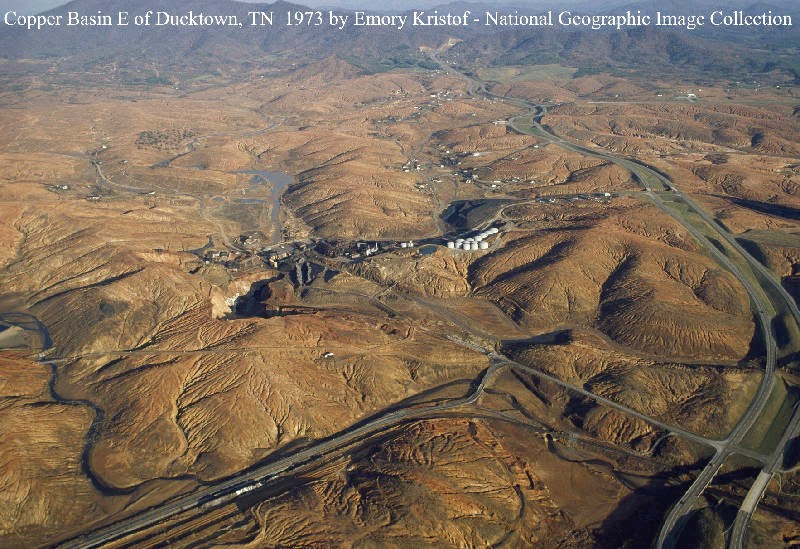
Living in Coppertown was like living on the moon.  The whole area was raw ground, bare and bumpy from erosion ditches cuttin’ through every which way.  As far as the horizon, it looked like a wrinkled, brown paper bag. There weren't no bushes, nor grass neither – no green things weaving through to settle our homes in to the land and make ‘em look like they belonged.  So why did Miss Post bother teaching us about trees when we didn't have any?

Coppertown,Tennessee (circa. 1980s) is based on a real place and was very much a moonscape as described above while the copper mine was operating. The pollution produced from smelting and the resulting acid rain left the landscape bare of any vegetation and void of birds, insects, and animals.  Nylon stockings left to dry outside would be eaten by the rain.  Rain would sting as it hit bare skin.  Lack of vegetation meant that the soil would badly erode whenever it rained, too.  The author includes a few pictures of the town and area to give us a very good sense about the landscape.

Photo by Associated Press/Times Free Press.
http://www.timesfreepress.com/news/opinion/freepress/story/2014/nov/09/helping-green-the-basin/272777/

I got very excited as I read this book.  Because…

When I do a workshop about lesson planning for the student-teachers in the education program here at the University, I include an interactive component that requires the students to think about the Alberta Education objective for this particular unit:

Describe characteristics of trees and the interaction of trees with other living things in the local environment.

Not the most electrifying objective out there.  So the challenge is for students to come up with a more interesting question (really, an essential question if the time allowed) that could lead into an inquiry project and excite the imaginations of grade 6 students.

Students come up with all sorts of ideas but one that comes up pretty consistently is “What would the world be like without any trees?”

Hence, my excitement about   A Bird on Water Street.

Throughout the novel, Jack, the protagonist questions why things are the way they are.  He’s interested in nature, curious about plants, insects and birds he’s never seen.  With encouragement from his teacher, he reads about how plants grow and starts a garden. He’s fortunate that the mine is on strike so that the air isn't as toxic as usual and his tender seedlings have a chance to grow.  He doesn't want to be a miner like his father and struggles with the internal conflict he feels to go against family tradition.  There are several plot lines but the one with Jack exploring the natural world as best he can makes this book a perfect fit for a unit about trees.


This book provides an opportunity to introduce a language arts component into a science unit without any effort at all.

Monday, February 2, 2015

Early Reader Round up

Who doesn't like a laugh or two? And what better way is there to encourage new readers than with fun, action and much silliness?   The following three suggestions will pique interest and engage beginner readers resulting in the occasional snort, snicker and guffaw.  

The Princess in Black by Shannon Hale and Dean Hale
So-- not your typical princess in pink scenario.   This princess has a secret identity with lots of daring-do.  She’s able to handle a troublesome, blue-horned monster and quell the curiosity of a most –annoying Duchess at the same time without breaking a sweat or putting a run in her black stockings.  This action-packed romp includes lots of brightly colour illustrations contributing to the farcical nature of the story.


Tales of Bunjitsu Bunny by John Himmelman
No one can kick higher, hit harder or throw farther than Isabel, the best bunjitsu artist in her whole school.  But what’s even more important than her martial arts ability is her wisdom.  She would never use her powers to hurt another creature – unless she had to.  “Bunjitsu is not about kicking, hitting and throwing,” she said.  “It is about finding ways NOT to kick, hit, and throw.” So, what could have been a pretty preachy book is one with humour and gentle insights in to life’s challenges and adventures.  I thought her one clever bunjitsu bunny when she outsmarted a boat of greedy pirates in a very non-violent way.


These are part of a slightly older series of early readers but I think the likable characters, silliness and illustrations will engage readers with no problem.  Minnie and Moo are cows living in the country that end up in mischievous situations that always come out right.  Like the night Moo wishes for thumbs and to go dancing.  Well, wish one would be near impossible to grant so Minnie orchestrates wish number two.  After a little gussying-up, the two cows  crash the party of the farmer, mix in, shake things up, and gain two admirers.  Things are going well until Moo starts to eat a hamburger and Minnie suspects that it’s been made from two friends who are missing.  The HORROR!  But don’t worry, Moo isn't a cannibal and all ends well.

All recommended for Kindergarten to grade 2 or 3.

Template Design | Elque 2007